Detectors are developed to answer specific scientific questions, with instrumentation tightly connected to the measurements researchers need to make—from rare events and isotopes to neutrinos and collider science. ORNL starts with the precise physics need and designs detectors to answer the questions being pursued by researchers.
End-to-End Capability
ORNL teams possess world leading expertise across detector materials, design, simulation, electronics, mechanics, integration, software, and analysis, covering the full spectrum of detector design, prototyping, testing, and deployment.
Major-Facility Connections
From underground experiments to reactor sites, spallation neutron sources, and high-energy colliders, detector science at ORNL is closely linked to world-class facilities and collaborations, including the Spallation Neutron Source, High-Flux Isotope Reactor, the Facility for Rare Isotope Beams Decay Station, and the future Electron-Ion Collider.
A Culture of Building
ORNL has a long history of developing new detector technologies when off-the-shelf approaches are not sufficient to meet the need. ORNL has a proven track record developing purpose-built instruments for the most challenging physics problems.
People and Perspectives
Detector science is about more than physics; it is also a story about the people who build the tools needed for discovery.
At ORNL, scientists and engineers work where difficult questions, ambitious experiments, and emerging technologies meet. They design systems that do not yet exist, solve integration problems across disciplines, and train the next generation of researchers to work at the frontier of measurement.
This builder mindset is part of the laboratory’s broader culture. It shapes not only the instruments that ORNL contributes to major collaborations, but also the way students, postdoctoral researchers, and staff learn to tackle complex problems with creativity, collaboration, and rigor.
Mitch Allmond
Shaping a Better Fundamental Understanding of Matter
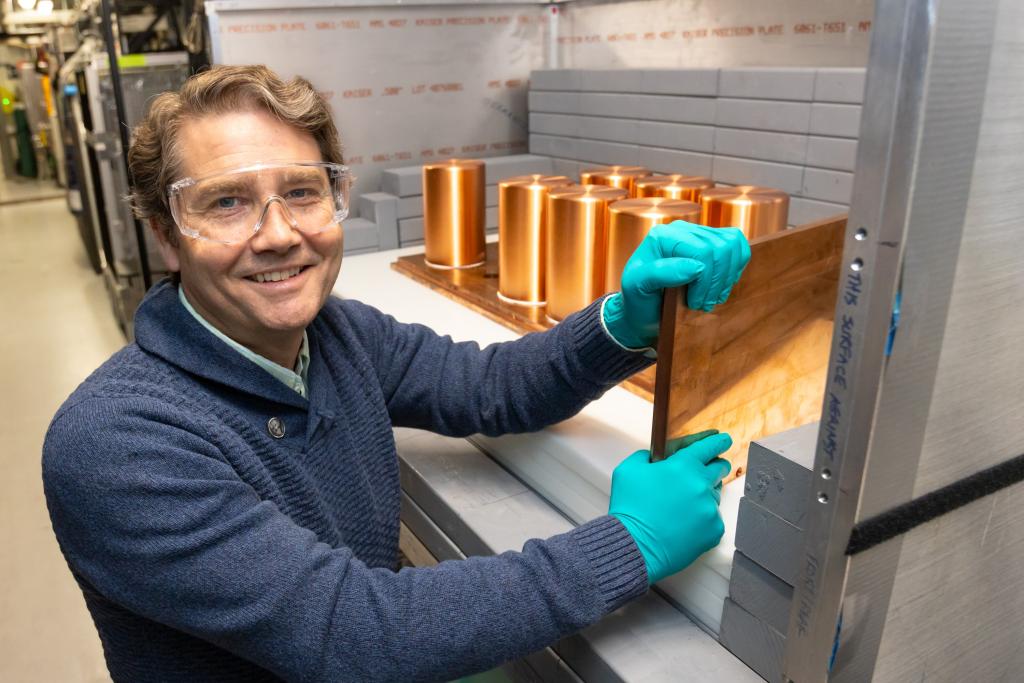
A key feature of detector development efforts at ORNL is building powerful collaborations not only within the laboratory, but across the U.S. and international science communities. For example, ORNL provides scientific leadership to the ePIC and LEGEND projects, but hundreds of members from across the globe play important roles. Both projects are flagships of collaborative detector development in nuclear physics.
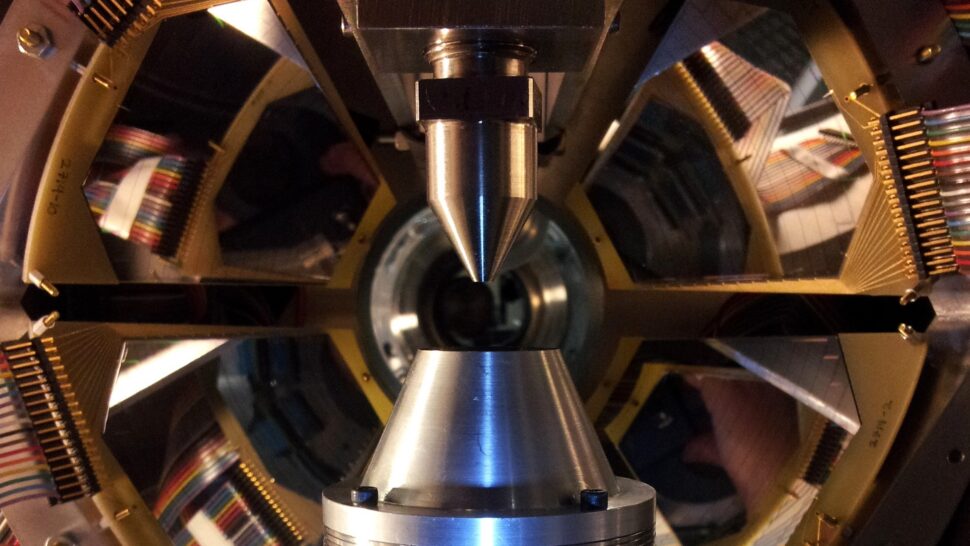
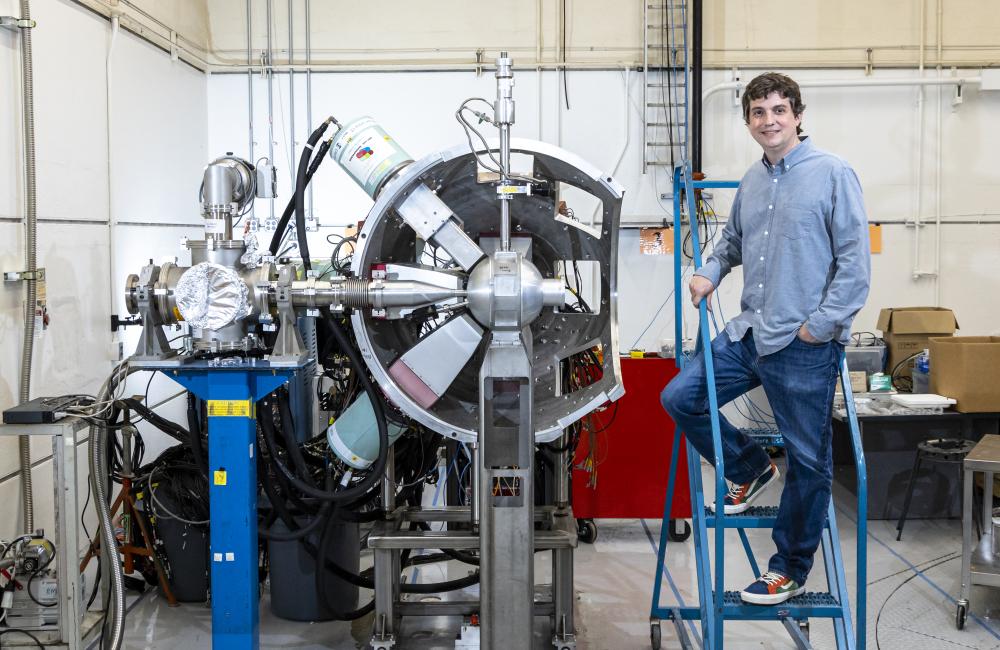
Big impacts can come in smaller packages, as well. The GODDESS detector collaboration, with a detector array that fits on a tabletop, has supported large numbers of researchers from the U.S. and abroad, including dozens of undergraduate students and Ph.D. thesis projects. Similarly, the FRIB Decay Station Initiator, large components of which are led by ORNL, has supported measurements at FRIB from researchers at institutions outside of ORNL.