Key Links
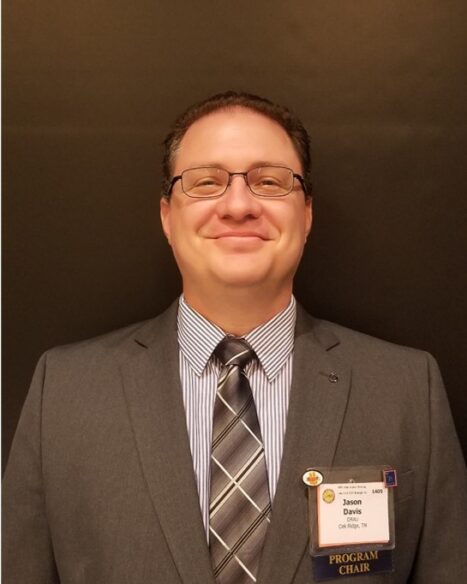
Jason joined ORNL in April 2022 as a senior radiological engineer within the Nuclear and Radiological Protection Division, where he was responsible for leading technically complex high-hazard radiological work planning and development of innovative radiological hazard controls. In this capacity, he acted as a radiological protection subject matter expert for planning and design of nuclear and radiological facility modifications and performed front-end assessments of engineering control cost/benefit decisions.
In October 2024, Jason transferred to the Radioisotope Science and Technology Division where he serves as both a nuclear material characterization analyst and alternate material balance area representative. In this role, he performs non-destructive analysis of nuclear materials to determine isotope types and activities in containers and process holdup. He also serves as a subject matter expert for the high purity germanium detectors throughout the Isotope Science and Enrichment Directorate.
Jason has more than 21 years of experience in health physics, radiological protection, and dose assessment within academia, U.S. Department of Energy, and Centers for Disease Control and Prevention. Areas of expertise include internal and external dosimetry, diagnostic medical imaging, radiation biology, and radiation protection. Instructional experience includes formal post-secondary instruction, radiation protection short courses, and U.S. Department of Energy Radiological Worker training.
He holds adjunct faculty appointments in the University of Tennessee – Knoxville’s Department of Nuclear Engineering and University of Michigan’s Department of Nuclear Engineering & Radiological Sciences.
Jason is certified in the comprehensive practice of health physics by the American Board of Health Physics. He received a master of science in health physics from the University of Nevada, Las Vegas in 2008 and was awarded his doctorate in applied physics by Idaho State University in 2014. He is an active member of the Health Physics Society.
He maintains active research interests in radiation measurement, biokinetic modeling, aerosol physics, nanomaterial toxicology, radiation microdosimetry, and the assessment of individuals that have become internally contaminated with radioactive materials.