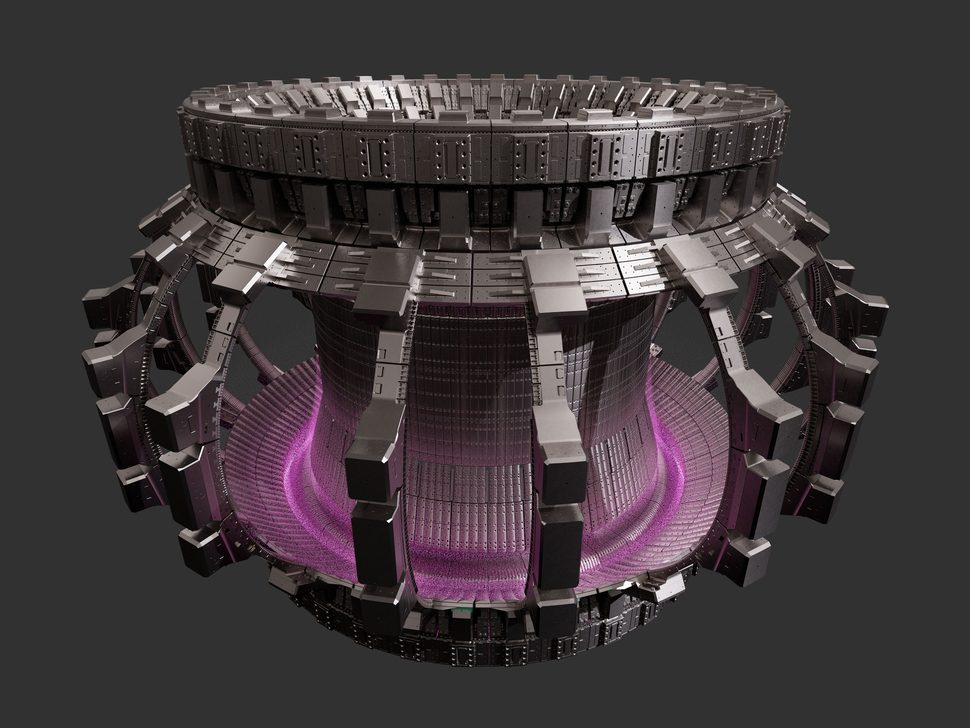
Tokamak fusion devices operate in pulses that require carefully planned operational parameters to control and confine the plasma. This project will deliver an AI-enabled digital twin —a virtual, data-informed counterpart to a fusion device— to support and accelerate tokamak operations by creating, sustaining, and optimizing fusion plasma scenarios between experimental pulses. SPARC, the net-energy tokamak under construction by Commonwealth Fusion Systems (CFS), is the ideal testbed for developing and testing these AI-accelerated workflows.
The project consists of four connected efforts. First, the team —led by CFS PI Tom Looby and supported by ORNL, LLNL, PPPL, SLAC, MIT, CMU, Ansys, General Atomics, Google DeepMind and NVIDIA— will connect the CFS computing ecosystem with DOE’s American Science Cloud, then use DOE supercomputers and established fusion modeling tools to efficiently generate large datasets. Second, those datasets will help train AI surrogate models that can inform control room operators about pulse behavior in near-real-time. Third, they will also bridge the simulation-to-experiment gap and create standardized benchmarks to validate the models using historical data from the existing U.S. tokamak fleet. The final area will connect the digital twin to SPARC, training the model on its pulse data to help inform subsequent experimental pulses.
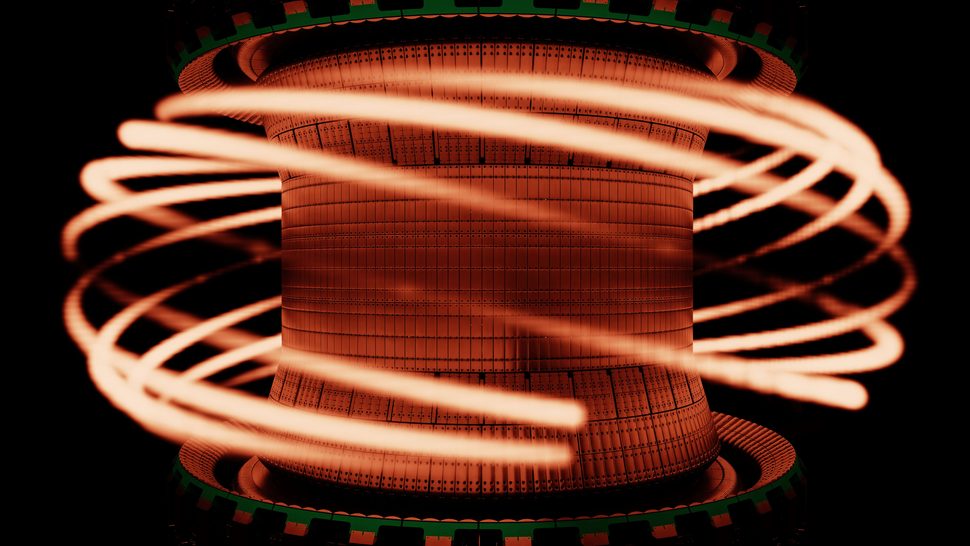
In addition to helping optimize plasma scenarios, the digital twin will connect plasma behavior with lifetime performance models of plasma-facing components. Using AI to generate the large datasets will drastically reduce the time and computing cost required, and the AI surrogate models trained using those datasets will enable much more rapid pulse design and execution on SPARC. By automating large, complex computational workflows and rapidly adapting to experimental data, the platform will eliminate human bottlenecks, accelerate pulse cadence, and give control room teams better simulation-based operational support. This project brings together partners from private industry, national laboratories, and universities to help ensure these tools are useful across the fusion community and accelerate commercial fusion deployment.
Partners:
- Commonwealth Fusion Systems (Lead)
- Ansys
- Carnegie Mellon University
- General Atomics/DIII-D
- Google DeepMind
- Lawrence Livermore National Laboratory
- Massachusetts Institute of Technology
- NVIDIA
- Princeton Plasma Physics Laboratory
- SLAC National Accelerator Laboratory