ORNL Directors
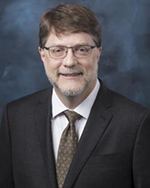
Stephen Streiffer, Laboratory Director
2023–present
UT-Battelle
As a materials scientist, Streiffer joined ORNL after extensive experience across the national laboratory system. He previously served as the interim director of SLAC National Accelerator Laboratory and spent 24 years at Argonne National Laboratory, concluding his tenure as the deputy director for science and technology.
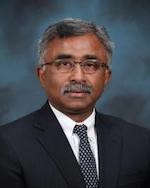
Thomas Zacharia, Laboratory Director
2017–2022
UT-Battelle
In 2017, Zacharia was appointed laboratory director. Zacharia began his career at ORNL as a postdoctoral fellow in 1987. Understanding the incredible potential of computing to improve scientific research, Zacharia advanced computational science at the laboratory as the leader of a new materials modeling and simulation group. Through several leadership roles, including associate laboratory director for computing and deputy director for science and technology, Zacharia built the laboratory into a global supercomputing power.
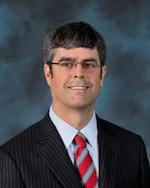
Thom Mason, Laboratory Director
2007–2017
UT-Battelle
A condensed matter physicist, Mason joined ORNL in 1998 to serve as science director for the Spallation Neutron Source project, which was under construction. As laboratory director, Mason signified a shift from modernization and growth to “executing the science.”
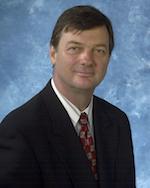
Jeff Wadsworth, Laboratory Director
2003–2007
UT-Battelle
During Jeff Wadsworth’s tenure, ORNL established the Oak Ridge Leadership Computing Facility, completed construction of the Spallation Neutron Source, moved the U.S. ITER office to Oak Ridge, and made great strides in laboratory safety and operations. An internationally recognized metallurgist, Wadsworth left ORNL in 2007 to become executive vice president for laboratory operations at Battelle.
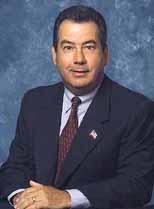
Bill Madia, Laboratory Director
2000–2003
UT-Battelle
A former Battelle nuclear researcher, Madia was part of DOE’s “Blue Ribbon Panel” to consult on the Three Mile Island accident. Prior to joining ORNL, Madia served as director at another Battelle-managed laboratory, Pacific Northwest National Laboratory. Construction began on the Spallation Neutron Source and the Center for Nanophase Materials Sciences during his

Alvin Trivelpiece, Laboratory Director
1989–2000
Martin Marietta Energy Systems
Lockheed Martin Energy Research
As director, Trivelpiece led ORNL into new partnerships with universities and industrial firms in efforts to achieve faster technology transfers to the commercial marketplace. Trivelpiece promoted high-performance scientific computing at the laboratory and started the process that eventually led to the construction of the Spallation Neutron Source.

Alex Zucker, Laboratory Director
1988–1989
Martin Marietta Energy Systems
When Herman Postma assumed the role of senior vice president at Martin Marietta Energy Systems, Zucker was named acting director. Zucker first came to the laboratory in 1950 and was an early pioneer in nuclear physics research. He was later instrumental in several administrative milestones, such as helping bring about the High Temperature Materials Laboratory.
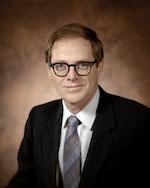
Herman Postma, Laboratory Director
1974–1988
Union Carbide Corporation
Martin Marietta Energy Systems
With a background in nuclear fusion, rather than fission, Postma was the first ORNL director without Manhattan Project experience. Coinciding with the oil crisis of the 1970s, Postma’s tenure as director saw new directions for the laboratory, including expansion of environmental science and conservation projects.
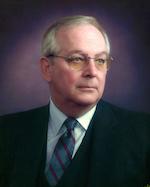
Floyd Culler, Laboratory Director
1973–1974
Union Carbide Corporation
Deputy laboratory director during Weinberg’s departure, Culler assumed the role of acting laboratory director in 1973. Coming from the Y-12 plant, Culler began his career at ORNL in 1947 as a design engineer for nuclear-fuel recycling plants and later served as director of the Chemical Technology Division and associate laboratory director for nuclear technology.
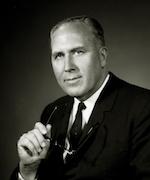
Clarence Larson, Laboratory Director
1950–1955
Union Carbide Corporation
A veteran of the Manhattan Project, Larson led the design and construction of the calutrons used for electromagnetic separation of uranium-235 during the war. Following acting executive director Nelson Rucker, Larson presided over the $20 million budget for new buildings.
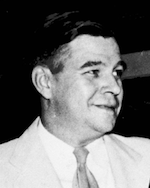
Prescott Sandidge, Executive Director
1947–1948
Monsanto Chemical Company
Following James Lum’s departure in 1947, Lum’s assistant Sandidge was named executive director while Monsanto Chemical Company completed its contract for the Atomic Energy Commission.
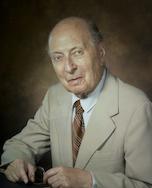
Eugene Wigner, Director for Research and Development
1946–1947
Monsanto Chemical Company
Wigner came to the laboratory in early 1946 on a year’s leave from Princeton University. His goals as research director were developing university research reactors; establishing nuclear science training; and coordinating scientific research with universities throughout the South.
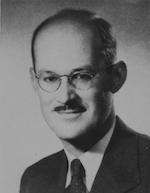
James Lum, Executive Director
1945–1947
Monsanto Chemical Company
As executive director, Lum oversaw administrative tasks for the laboratory, while the director for research and development oversaw the science mission.

Martin Whitaker, Laboratory Director
1943–1945
U.S. Army
Instrumental in building the Chicago Pile 1 at Stagg Field in Chicago, Whitaker brought Enrico Fermi and Arthur Compton to Oak Ridge to witness the first operation of the Graphite Reactor.