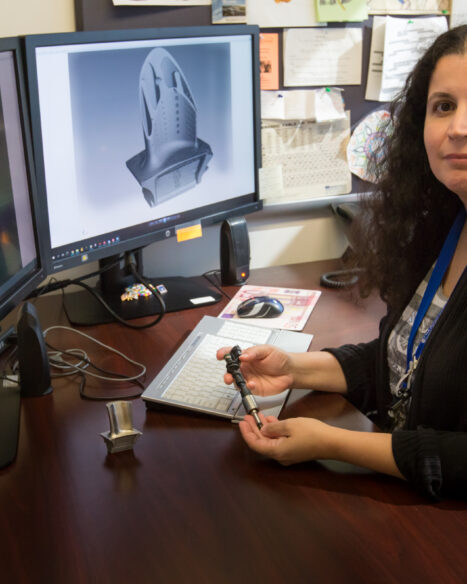
Neutrons at the Department of Energy’s (DOE) Oak Ridge National Laboratory (ORNL) are being used to observe the manufacturing process of silicon carbide (SiC), a ceramic material used for nuclear applications, ballistic armor and spacecraft components. SiC is a desirable material for extreme environment applications because of its unusual combination of high-temperature strength, oxidation resistance and radiation tolerance.
Using neutron imaging at DOE’s Spallation Neutron Source (SNS), researchers from the Manufacturing Demonstration Facility (MDF) at ORNL, the Versatile Neutron Imaging Instrument (VENUS) team at SNS and the University of Tennessee, Knoxville (UTK), are pulling back the curtain and observing how this material takes shape in real time. Their work provides an opportunity to develop lighter, stronger armor and longer-lasting spacecraft parts that can withstand extreme temperatures.
“At the core of this research is the desire to better understand the material’s behavior during the transition process,” said Corson Cramer, a ceramics processing engineer at MDF. “We’re not only pushing the limits of the materials, but also how we measure and characterize them.”
Scientists are taking a peek inside the furnace
The MDF team used binder jet additive manufacturing to create their samples, which they then placed inside a furnace to undergo melt infiltration where a secondary material flows into the porous structure to form a dense ceramic composite. The ability to observe this infiltration step is especially important. The material’s performance depends on production, but it can be difficult to observe what takes place inside a furnace.
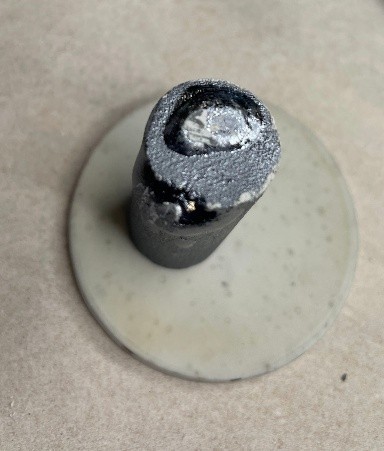
The team opted to study SiC undergoing the melt infiltration process because it’s one of the most scalable and industrially commercialized techniques.
“A lot of companies use this method in the real world,” said Dustin Gilmer, an assistant professor in the Material Science and Engineering Department at UTK and the University of Tennessee’s Space Institute. “It’s a very common way to make SiC. We chose to study the process in order to understand it better, because most people don’t know what’s happening while the material is in the furnace.”
While inside the furnace, the materials transform and undergo changes as the temperature rises. Historically, it has been difficult to observe the changes, making it difficult to understand the abnormalities that can happen, like small defects or inconsistent outcomes.
Neutron imaging at SNS
Synchrotron X-rays are often used to study this transition process, but the team was looking for a different contrast within the samples in order to study the melt infiltration of silicon in the SiC matrix in real time. As a result, they turned to neutron imaging at ORNL’s VENUS instrument to measure change kinetically and obtain hyperspectral 2D radiographs of the process.
“Ceramics, like SiC, can have transparency issues when looking at them with X-rays, so we’re trying to find ways to better understand what happens while ceramic materials are processing. Neutrons give us the contrast we need to see what’s happening,” said Cramer.
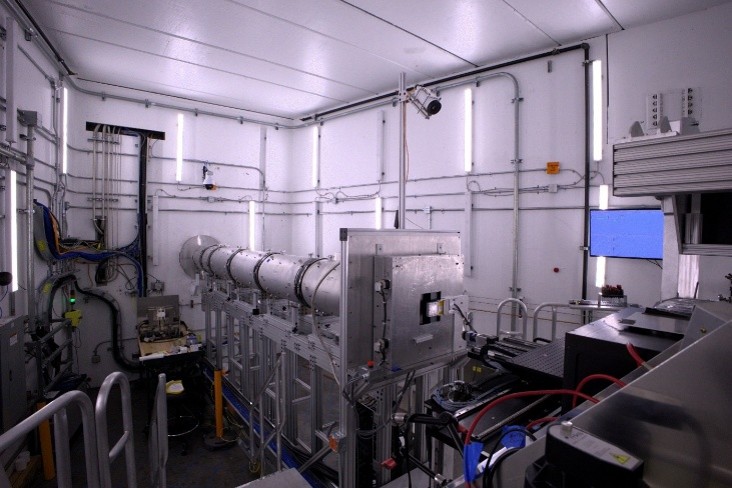
“Changes in material can happen very fast. In the past, we’ve only been able to measure before-and-after results. We couldn’t see the transition happening, and that’s a lot of missing information,” said Hassina Bilheux, lead neutron scattering scientist at VENUS. “There’s a lot of modeling that’s possible if you have the experimental data to understand how the sample transitions.”
Bilheux shared another reason why VENUS was the perfect instrument for the job.
The VENUS team has been testing a new detector that can measure a signal without needing to measure an image and uses machine learning to look for trends.
“Material science, neutron science, machine learning, such very different fields of research are working together here to solve a problem. Super Intelligence (SI) [formerly known as artificial intelligence] has been a huge contribution for us,” said Bilheux.
Looking ahead at ceramic manufacturing
The team’s research is ongoing. Should the data show definitive results, they plan to perform more experiments surrounding melt infiltration to continue dissecting the process to better understand it. This work could lead to improvements across multiple real-world applications, including creating stronger armor while keeping it light enough to avoid weighing down the wearer.
Along with advancing research surrounding 3D-printed ceramics, neutron research at ORNL enables researchers to make groundbreaking discoveries that support critical areas, such as SI, quantum and reliable energy systems that support our nation’s economy and safety.
SNS is a DOE Office of Science user facility. The Manufacturing Demonstration Facility is supported by DOE’s Advanced Materials and Manufacturing Technologies Office and acts as a nationwide consortium of collaborators focused on innovating, inspiring and catalyzing the transformation of U.S. manufacturing.
UT-Battelle manages ORNL for the Department of Energy’s Office of Science, the single largest supporter of basic research in the physical sciences in the United States. The Office of Science is working to address some of the most pressing challenges of our time. For more information, please visit energy.gov/science.