Hydropower Reliability and Performance
About
Non-powered Dam Development Opportunities
Overview/Objective
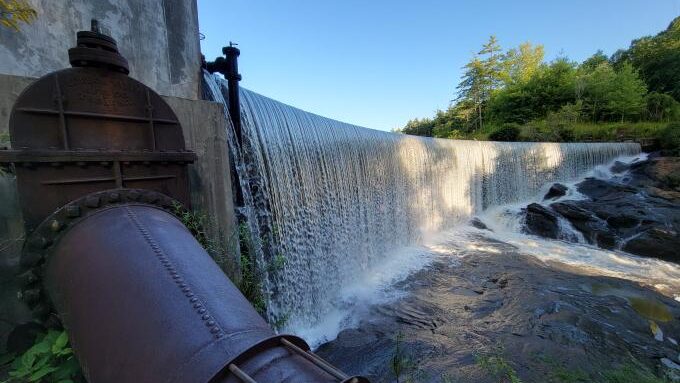
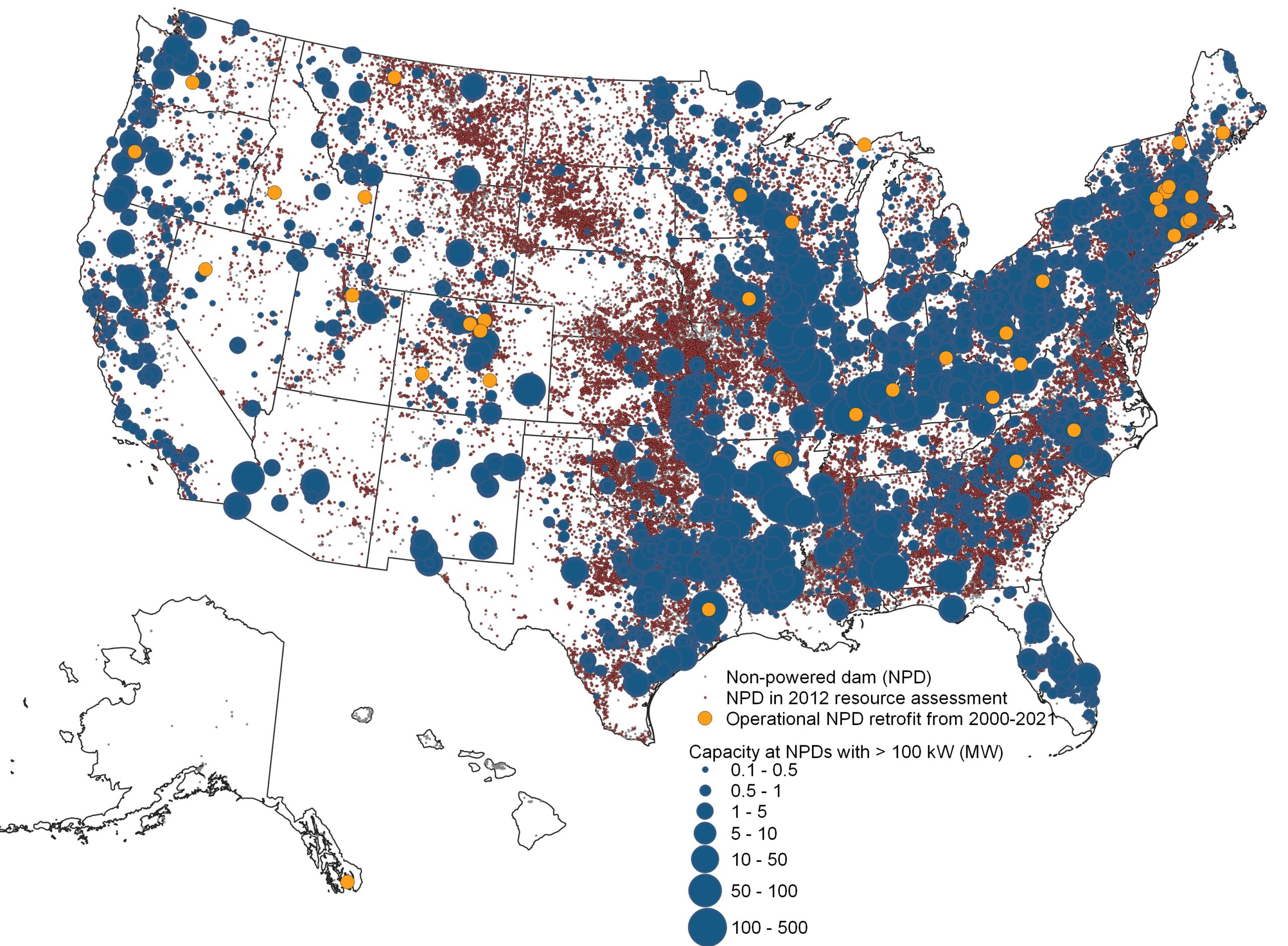
Although more than 92,000 dams are scattered across the United States, the vast majority — over 89,000 — do not generate electricity through hydropower. Researchers at the U.S. Department of Energy’s (DOE’s) Oak Ridge National Laboratory (ORNL) are assessing the feasibility of retrofitting some of these non-powered dams (NPDs) to add reliable energy generation for strengthening the U.S. power grid.
In its report, ORNL identifies key development challenges, including aging infrastructure, dam design limitations, costs, timelines, and environmental considerations. The goal is to accelerate design approaches and innovations that increase energy from hydropower while ensuring environmental compatibility and economic feasibility.
Because these dams already serve a variety of functions including irrigation, navigation, water supply, flood control, and recreation, NPD retrofits must accomplish several priorities:
- Maintain or improve existing functionality of dam and stream
- Enable new retrofitted facility to reliably generate electricity
- Minimize changes to water surface level and surrounding environment and ecosystem
- Ensure each retrofit is cost-effective

Results
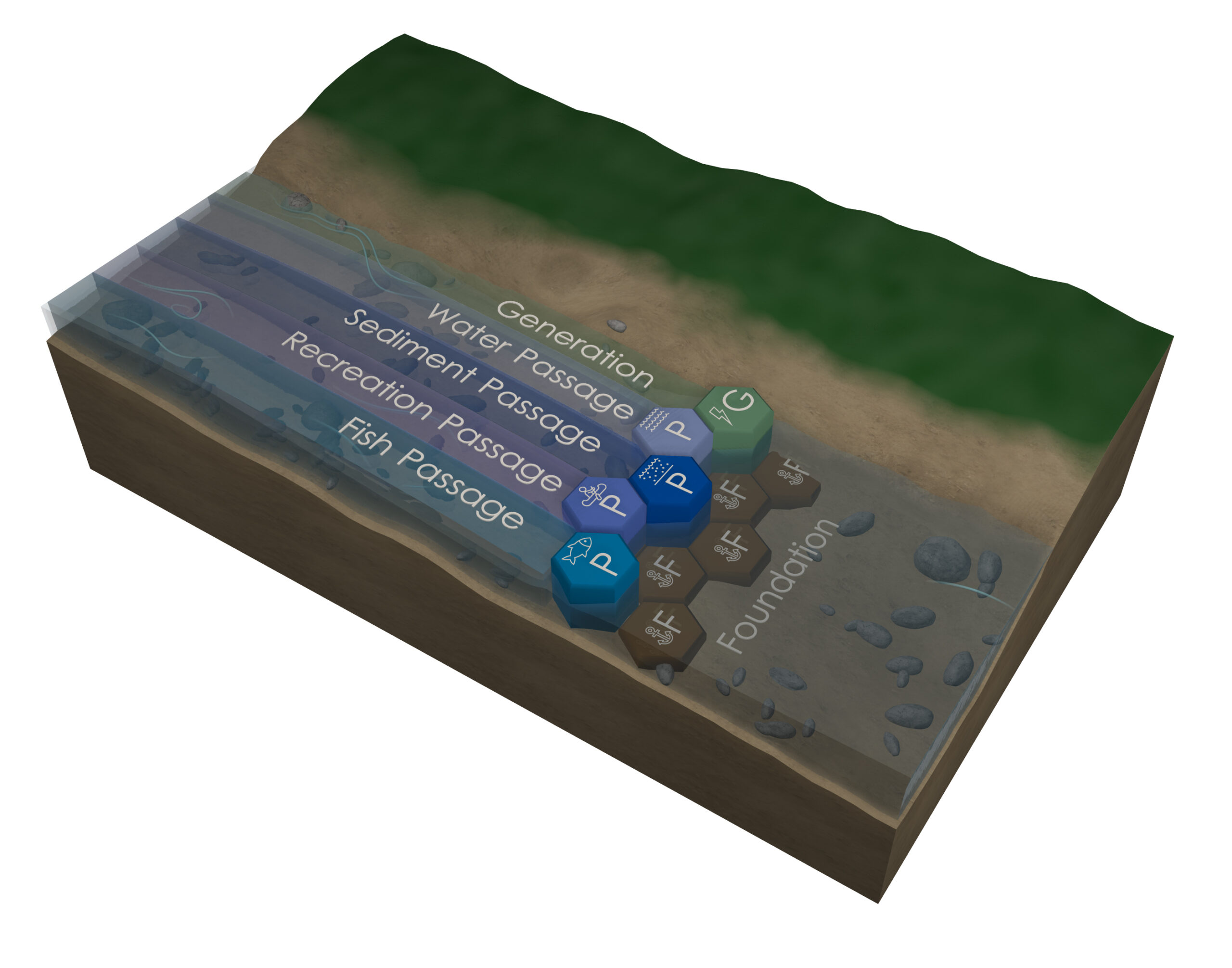
ORNL researchers have taken a four-pronged approach in their assessment and ongoing study, including hosting key stakeholder workshops, creating two new NPD classification tools, updating the NPD resource assessment, and summarizing NPD-specific design strategies that follow the Standard Modular Hydropower development framework.
ORNL conducted the virtual workshops between December 2020 and December 2021. The first workshop explored challenges and opportunities related to NPDs and brought together a variety of stakeholders to discuss ways to improve classification and data access. The three following workshops presented the concept and beta version of newly developed NPD classification tools – the NPDamCAT App and NPD Explorer App – to solicit feedback and suggestions for improving the research products.
Design strategies were built upon the Exemplar Design Envelope Specification for Standard Modular Hydropower Technology framework, and provide a holistic approach to NPD retrofits toward reducing the uncertainty of and costs related to site-specific design challenges – acknowledging that no one solution will meet all needs.
Taken all together, these efforts enhance understanding of NPD retrofit opportunities and design considerations.
Impact
Representing early-phase efforts of the DOE’s Hydropower and Hydrokinetic Office to address the challenges and opportunities of NPD development, this research aims to supply high-quality data and the means to explore NPD information, better inform stakeholders of economic and environmental requirements, and begin to address the dual goal of reliable low-carbon energy and environmental sustainability.
Next Steps
ORNL researchers will report on their assessment of NPDs, which uses advances in hydrologic modeling, improved elevation data resolution and coverage, and updates to infrastructure inventories to refine estimates of NPD potential.
Contact
Scott T DeNeale, Water Resources Engineer
Standard Modular Hydropower
Overview/Objective
Although hydroelectric generation accounts for roughly 6% of U.S. electricity consumption and is a major source of untapped energy generation in the country, development of new hydropower facilities has all but come to a standstill. Conventional hydropower development can no longer compete with other energy sources because of the cost of site-specific design and customized equipment and structures; the lengthy, costly licensing process; and evolving environmental constraints on design and operation.
Recent small hydropower development in the United States has been concentrated on powering currently unpowered water resource infrastructure such as non-powered dams (NPDs) and irrigation canals. This trend represents a significant break from traditional approaches focused on development at sites without existing structures. These new stream-reach development (NSD) opportunities form an overwhelming majority of the nation’s remaining hydropower resource potential. And most opportunities fall into the category of small hydropower (i.e., 10 megawatts or less of power potential).
The objective of the U.S. Department of Energy’s Oak Ridge National Laboratory’s (ORNL’s) Standard Modular (SMH) Hydropower project is to rethink small hydropower development in the United States to make plants not only viable but also advantageous through development of standard modular hydropower SMH technology that is inexpensive and environmentally sustainable.
The project’s main goals are:
- To standardize design, review, regulation, manufacturing, operations, and maintenance to reduce site specificity and project costs
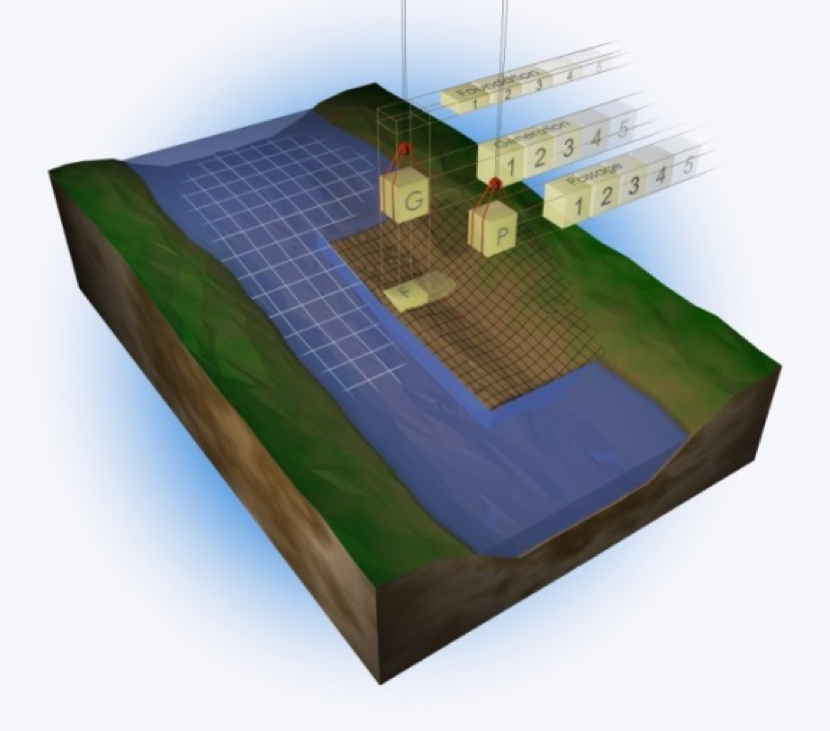
- To envision the physical or virtual organization of hydropower facilities as modular structures that will deliver energy benefits at many different sites
- To site and develop hydropower facilities based on environmental compatibility, minimizing disturbances and improving ecosystem health
The original project focused on concepts for NSD where no existing water infrastructure is present, and more recent efforts under the SMH project have focused on siting and design for NPDs. Both the NSD and NPD efforts have resulted in multiple publications and online tools.
In addition, researchers at ORNL are in active engagement with industry partners to advance SMH facility design concepts and low-head modular technologies to accelerate SMH deployment. These partnerships are available through DE-FOA-0001836, Topic Area 1, and DE-FOA-0002080, AOI 2a.
Results
The major outcome of this project will be a national-scale transformational approach to new hydropower development. ORNL is conducting studies that will produce templates and case study examples for the hydropower industry to implement in practice. Rather than physical module designs, the end product will be a stakeholder-validated framework, including criteria, models, design tools, testing facilities, and assessment protocols for specifying, designing, simulating, testing, and demonstrating the efficacy of SMH as an environmentally compatible, cost-optimized energy generation technology.
Impact
A recent U.S. Department of Energy executive summit on hydropower research and development brought together more than 65 hydropower industry executives, government leaders, and technology researchers to discuss how companies can collaborate with labs to accelerate innovation and achieve bottom-line results. The session on technology advancement for hydropower highlighted the industry need for modularity, standardization, ecological design, and development that also enhance or improve the environmental conditions of a stream reach. This project will help industry navigate a new pathway for hydropower development by providing broadly accessible templates that outline comprehensive, validated strategies for developing SMH facilities under a variety of deployment scenarios.
For more information, visit the project’s webpage or peruse its list of publications.
Learn More
Standard Modular Hydropower Fact Sheet
Contact
Scott T DeNeale, Water Resources Engineer
Modular Pumped Storage – Feasibility and Economic Analysis

Overview/Objective
Development of global and domestic pumped storage hydropower (PSH) has traditionally focused on construction of large, highly customized plants that provide more than 100 megawatts (MW) of electricity. However, these plants are costly and face significant challenges. Therefore, alternative designs in PSH technology that are smaller and modular are gaining wider interest.
Small modular PSH (or m-PSH) could be more cost-competitive and reduce many of the barriers facing conventional designs, such as access to capital, the long and uncertain licensing process, and the suppression of market prices and subsequent revenues caused by adding utility-scale storage to the grid.
The U.S. Department of Energy’s (DOE’s) Oak Ridge National Laboratory researchers worked to develop a cost/benefit resource tool that assesses the cost and design dynamics of m-PSH; weighs the benefits against economies of scale inherent in utility-scale development; and measures the economic competitiveness of m-PSH against alternative distributed storage technologies, such as batteries.
Results
Researchers developed case studies to explore unique m-PSH designs, created a cost-modeling tool to quantify the cost of developing m-PSH projects on undeveloped sites, evaluated the requirements and feasibility of scaling various m-PSH technology applications, and determined the technological feasibility and economic viability of m-PSH. The studies revealed that small-scale, m-PSH systems are largely not cost-effective under current market conditions, but additional technology advancements could improve feasibility. The study’s results are documented through a report on the feasibility and viability of m-PSH and a report on a predictive cost methodology for m-PSH.
Impact
From its research, the project team developed a general cost estimate for m-PSH projects with installed capacities of less than 100 MW. The team characterized the challenges inherent to m-PSH projects and technologies and evaluated the cost reduction opportunities for different m-PSH project types.
This resource may allow industry and the DOE’s Hydropower and Hydrokinetic Office to make an informed evaluation of the feasibility, risks, and potential benefits of pursuing an R&D strategy to reduce the cost of PSH development through modularization.
This project ran from January 2014 to January 2016. It has now concluded.
Contact
Scott T DeNeale, Water Resources Engineer
Optimizing Micro-Hydropower and Fish Passage on Tribal Lands

Overview/Objective
For the people of the Southern Appalachian Mountains, community resilience requires a balance between conserving natural and cultural resources and securing access to energy resources.
Southern Appalachia includes the ancestral and present-day homelands of the Eastern Band of Cherokee Indians, or EBCI. Approximately 10,000 members of this sovereign nation still reside in the Qualla Boundary, an area consisting largely of rural and mountain communities adjacent to the Great Smokey Mountains. As a result, these communities often lack reliable connectivity to electricity. Back in 2009, the EBCI explored the feasibility of deploying hydropower within the Qualla Boundary as part of its Strategic Energy Plan. However, concerns about the impacts of traditional hydropower along the Oconaluftee River Basin to ecologically and culturally important fauna as well as costs halted efforts to implement hydropower.
The EBCI and Oak Ridge National Laboratory are exploring smaller scale, less intrusive hydropower options, including dam-less run-of-river systems. These are easier to install in a mountainous landscape and can provide the community with an economical and reliable source of energy, while protecting and reconnecting aquatic species in streams that have been separated by barriers such as culverts and dams.
Research
Over the next two years, researchers at ORNL will partner with the EBCI to:
- Assess micro-hydropower (<100KW) potential in establishing a network of smaller dam-free facilities within the Oconaluftee River Basin
- Identify and prioritize those species of ecological and cultural importance to the tribe and quantify any barriers to aquatic organism passage
- Use functional connectivity models to identify those barriers that are a priority to remove to ensure the most suitable restoration of habitats
- Develop scientific tools that incorporate the importance of cultural values when developing energy and environmental restoration solutions
- Determine micro-hydropower network configurations that may include French vortex generator systems to minimize environmental impacts.
ORNL researchers are collaborating in monthly feedback meetings with the EBCI and other interested parties, including the Southeast Conservation Adaptation Strategy and Southern Appalachian Biosphere Cooperative, to verify and validate critical needs of this unique energy development/species restoration project.
Impact
Throughout the ages, the people of the Eastern Band of Cherokee Indians remain the most enduring environmental stewards of Southern Appalachia. Their efforts to improve access to low-cost, reliable electricity will benefit an under-represented and under-sourced area of the nation where many residents rely on small generators to heat and cool their homes today.
Success of the program will be measured in its ability to balance the energy needs of the people with the environmental needs of the aquatic species, which also call Qualla Boundary home.
This holistic approach may serve as a pilot for other communities moving forward.
Contact
Evin Carter, Wildlife Ecologist
Assessing U.S. Conduit Hydropower Potential
Overview/Objective
For more than a century, hydropower has served as an important energy source. A report released by the U.S. Department of Energy’s Oak Ridge National Laboratory (ORNL) assesses the potential to generate electricity from new hydropower operations along existing water conduits in the municipal, agricultural, and industrial sectors throughout the United States. These conduits include pipelines, irrigation canals, and other water channels.
More than 350 conduit hydropower projects have received federal regulatory approval since 2013. Conduit hydropower installations are typically small, with minimal environmental impacts and a simplified permitting process. They offer the potential to generate new electricity for the grid and new revenue for water system operators.
To quantify the potential for further conduit hydropower development, the ORNL research team conducted a systematic nationwide analysis, evaluating four categories of conduits:
- Water supply pipelines for municipal and industrial uses
- Wastewater discharge conduits from municipal and industrial systems
- Agricultural water conduits: irrigation canals, ditches, and pipelines
- Thermoelectric power plant cooling water discharge conduits
For each type of conduit, the team developed and implemented a method to estimate hydraulic head and annual water flows – and in turn the hydropower potential – at specific sites, based on analyses of satellite imagery, topography, and existing datasets on water systems and power plants. These methods support a consistent, replicable evaluation of conduit hydropower potential across the nation, though they are not sufficiently accurate to inform project-specific feasibility assessments or investment decisions.

Results
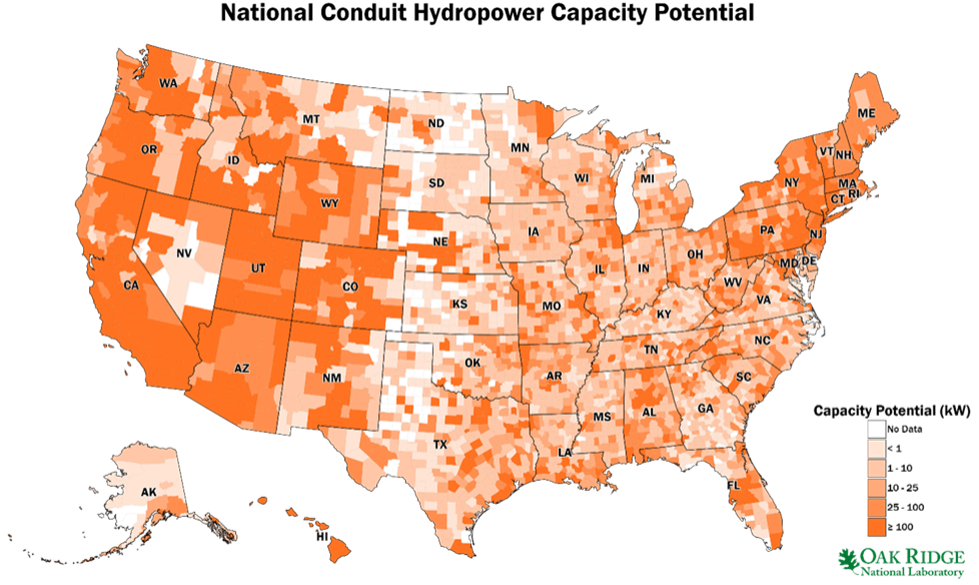
The analysis conservatively estimates that new conduit hydropower has the potential to add a total of 1.41 gigawatts of electricity to the U.S. power grid, more than two-and-a-half times the current installed conduit capacity of 512 megawatts. The agricultural sector accounts for nearly half the potential for new conduit hydropower development, 662 megawatts, followed by the industrial (378 MW) and municipal (374 MW) sectors.
The potential for conduit hydropower development in the agricultural sector was greatest in states with a combination of a large amount of irrigated acreage and hilly or mountainous terrain. Colorado had the most conduit potential, 154 MW, followed by Washington, Nebraska, California, Idaho, and Oregon.
In the municipal sector, conduit potential scaled generally with population – which is roughly proportional to flows in municipal water and wastewater systems – and terrain. The study found California to have more than twice the conduit development potential, 109 MW, than the second-ranked state, New York, which was followed by Colorado, Utah, Washington, Oregon, and Pennsylvania. Municipal water supply systems accounted for 90% of the total potential, compared with 10% for wastewater systems, due mainly to the greater water pressure in closed pipelines in water supply systems. However, in nine states, primarily in the Midwest, potential from wastewater systems may exceed that of water supply systems.
Industrial conduit hydropower potential was greatest in California, followed by Texas, Missouri, New York, and Maryland. Of the three sectors evaluated, the industrial sector has the greatest uncertainty, as most of the measured conduit potential, 60%, was associated with cooling water discharges from thermoelectric power plants. There are multiple potential economic and regulatory obstacles to conduit hydropower development at such sites, and, to the authors’ knowledge, there are as yet no projects of this type in the United States (though successful projects have been built in Europe).

Impact
The study found opportunities for conduit hydropower development in every state. In general, the western states have the largest resource potential, with the highest total capacity potential in California, followed by Colorado, Washington, Nebraska, and Oregon. The state-level potential reflects suitable topography to provide hydraulic head, and the scale of water supply.
Next Steps
Despite the abundance of potentially feasible sites and the relatively simple permitting process, conduit hydropower faces a number of challenges, including a lack of awareness of the technology, and needs for better understanding of the economics of conduit hydropower projects, site-specific information to inform investment decisions, and technical advances to support the integration of conduit hydropower into water systems as aging infrastructure is upgraded. Further research can help answer these questions and promote the growth of this valuable hydropower resource in our future grids.
Get Involved
If you have questions or would like to be added to the mailing list for updates on this work and notices of public events, please email [email protected] or [email protected]. In the coming year, the research team will be hosting multiple webinars on this work and leading discussions at conferences.
Puerto Rico Hydropower Resource Assessment
Overview/Objective
After decades of maintenance and financial challenges, Puerto Rico’s electrical system was dealt a knockout blow by Hurricanes Irma and Maria in September 2017, which resulted in a widespread blackout that left some Puerto Ricans without power for almost a year. The Caribbean island suffered subsequent long-term outages after earthquakes in 2020 and Hurricane Fiona in 2022, and frequent blackouts continue to impact Puerto Ricans day-to-day due to the condition of the electrical grid and the limited capacity of Puerto Rico’s current power plant fleet.
In response, the Legislative Assembly of Puerto Rico passed the Puerto Rico Energy Public Policy Act (Act 17) in 2019, which aims to repair and revitalize Puerto Rico’s electrical infrastructure while switching to energy sources that are 100% renewable by 2050. The legislative assembly already had the funds to pursue this goal, with $20 billion from the Federal Emergency Management Agency, the U.S. Department of Housing and Urban Development and other agencies. How it would invest these funds was an open question, however.
The U.S. Department of Energy (DOE) and six DOE national laboratories assisted in creating the PR100 Study, a two-year, comprehensive analysis of possible pathways for Puerto Rico to achieve its goal to fortify its energy system against extreme weather events and other natural disasters.
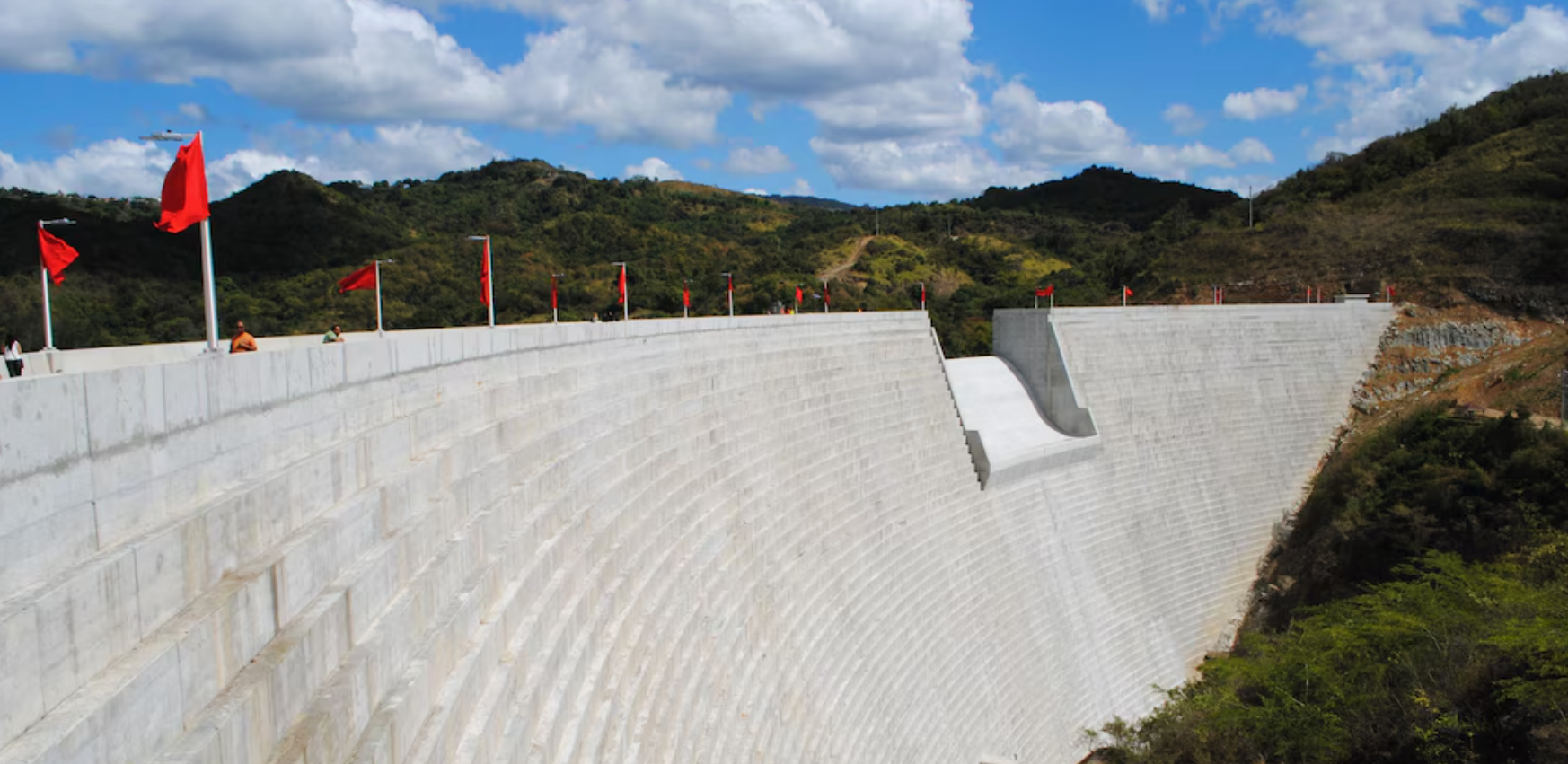
As a part of this effort, researchers at Oak Ridge National Laboratory’s Water Power Program examined and quantified Puerto Rico’s available hydropower resources, and assessed the potential for using the island’s non-powered dams (NPDs) for hydropower generation.
Results
During the first six months of the study, ORNL provided flow, head, energy, and cost estimates for 35 of the existing dams in Puerto Rico. ORNL researchers also worked with the Puerto Rico Electric Power Authority (PREPA) to determine the status and linkages of the various dams and whether they are powered are non-powered. The results of this assessment were used to provide direct support to the PR100 team in modeling capacity expansion in Puerto Rico.
Since then, ORNL has further evaluated the hydropower potential across Puerto Rico, including running sensitivity analysis of different rainfall, runoff, and streamflow modeling approaches. Additional work will also be conducted to estimate power and energy potential using consistent methodology applied during a concurrent NPD resources assessment across the contiguous U.S. (the lower 48 states). The team plans to publish a dataset of the historical simulated streamflow in Puerto Rico and incorporate the NPD assessment results into a broader, national dataset managed by ORNL, a final report and associated online material.
Impact
ORNL research provided a detailed analysis of Puerto Rico’s potential growth through powering non-powered dams, the results of which were incorporated into the final version of the PR100 report, issued in February of 2024. Data containing high-resolution streamflow reanalysis for Puerto Rico were used to inform the study and were published on ORNL’s Constellation repository. The team’s work gives the DOE and decision makers in Puerto Rico clear, accurate, and useful information about how hydropower could be used to strengthen the island’s electrical system and expand its energy generation capacity.
Learn More
Data Set: High-Resolution Streamflow Reanalysis for Puerto Rico, Version 1.0
Contact
Scott T DeNeale, Water Resources Engineer
Understanding and Addressing Reservoir Sedimentation

Overview/Objectives
Reservoir sedimentation—the accumulation of sediment behind dams—is a major but often overlooked challenge affecting reservoirs throughout the United States. Over time, trapped sediment diminishes reservoir capacity, impairs water management, disrupts recreation, and negatively affects downstream ecosystems. This issue is compounded by incomplete sedimentation data and highly variable sedimentation rates between reservoirs. To address this challenge, researchers at the Oak Ridge National Laboratory (ORNL) are developing comprehensive modeling frameworks and datasets aimed at quantifying sedimentation impacts and informing targeted mitigation strategies.
Approach
The ORNL team is integrating watershed inputs, physical processes within the reservoir, and management strategies to holistically represent the drivers and impacts of reservoir sedimentation. The project leverages existing tools, such as the Soil and Water Assessment Tool (SWAT), to model watershed processes and sediment transport. This input is coupled with an innovative reservoir sedimentation model to simulate sediment accumulation and mitigation strategies like dredging or flushing.
The project has identified two distinct case studies for initial model validation:
- Tuttle Creek Reservoir, Kansas: Characterized by extensive agricultural activity and significant sediment accumulation, this case provides robust data for model calibration. Active dredging activities at Tuttle Creek present a unique opportunity to validate modeling outcomes against the efficacy of real-world management strategies.
- Elephant Butte Reservoir, New Mexico: This site offers contrasting watershed dynamics and sediment management practices such as extensive upstream damming and sediment trapping offering valuable comparative insights.
Once validated with existing data, the modeling framework will be applied broadly to reservoirs and watersheds with limited sedimentation data, enabling targeted management practices and informed decision-making.
Expected Results and Future Directions
While the project is still in early phases, the team plans to release several key deliverables:
- A national dataset compiling historical reservoir storage surveys and documented sediment mitigation activities.
- A literature review summarizing how sedimentation drivers such as climate variability and land-use changes have been assessed in the past and highlighting critical and emerging research needs.
- A study demonstrating how remote sensing data can be used to identify hotspots of sediment trapping at the river basin scale.
Impact
By developing reliable methods to quantify reservoir sedimentation and evaluate management strategies, ORNL’s research will significantly enhance national water security, improve reservoir efficiency, and help address costly and ecologically damaging sediment-related issues. The project’s outcomes will inform facility operations, guide targeted investments in sediment monitoring and mitigation, and support proactive reservoir management nationwide.
Partnerships
ORNL is collaborating closely with experts from the Army Corps of Engineers and the Bureau of Reclamation, utilizing detailed data from past reservoir studies to increase confidence and coverage in how sedimentation is described. These partnerships will help expand the project’s impacts beyond currently studied reservoirs, addressing sedimentation challenges across wide-ranging hydrologic settings.
Learn More
Reservoir Sedimentation Fact Sheet
Contact
Carly H Hansen, Water Resources Engineer
Conduit Hydropower Engineering, Evaluation, and Technology Acceleration

Overview/Objective
The Conduit Hydropower Engineering, Evaluation, and Technology Acceleration (CHEETA) project seeks to improve deployment potential for conduit hydropower, following on the outcomes of Oak Ridge National Laboratory’s 2022 national conduit hydropower resource assessment, which identified over 1,400 megawatts of total power potential in the U.S. across municipal, agricultural, and industrial conduit systems. While this existing water infrastructure can provide reliable small hydropower production, it is an underutilized resource that has not been fully captured. The U.S. Department of Energy (DOE) has funded ORNL to improve deployment potential for conduit hydropower through the CHEETA project, which has thus far focused on “in-conduit” hydropower (ICH)—or “in-pipe” hydropower—for public water supply (PWS) systems, though the project is planning to cover conduit hydropower more broadly, in particular the municipal and industrial conduit sectors (shown in the figure below).
For PWS systems, ICH can be added to existing water infrastructure to harness energy within certain pressure zones, with pressure reducing valve (PRV) locations being an opportune target. Although a PRV can simply be replaced by a turbine to extract energy and thereby reduce pressure, bypass piping is more often added to convey water around a PRV and through a turbine. Such bypass loops provide redundancy to allow for maximum flow through the turbine and ease of operation during maintenance. Conceptually, excess pressure may be available due to the natural variation in elevation from a water source to a treatment plant or at certain points between a treatment plant and end users. Pressurized flows can also be tapped from wastewater, though such projects are far less common and face additional development challenges, particularly related to economic feasibility.
ICH provides several benefits: (1) predictable power generation as a result of continuous pressure and flow monitoring, (2) extended PRV service life due to reduced workload, (3) reduced barriers to entry thanks to a licensing exemption for adding power generation capability to existing infrastructure with limited to no environmental impact, and (4) low relative costs for up-front financing. PWS systems can vary widely, so ICH potential is often site-specific, though the technological solutions are well established.
While most currently operational ICH is in municipal water systems, there is great interest in exploring opportunities in the industrial sector. The CHEETA project is investigating conduit hydropower opportunities for both the municipal and industrial sectors. Research is currently planned to extend through 2027, producing a variety of products, including technical reports on challenges, costs, and opportunities, as well as a website hosting resources on best practices and a tool for estimating techno-economic feasibility for developing new in-conduit hydropower.

Results
Despite the technology being relatively mature, awareness of this ICH potential is somewhat lacking. To gather information and improve awareness, ORNL hosted an April 2024 virtual workshop on conduit hydropower opportunities and challenges, for which a workshop summary report is available. The workshop results highlighted challenges that developers face during the project development process, particularly related to stakeholder engagement, financing, power sales, permitting, site selection, and feasibility assessment, among others. Furthermore, ongoing case study development for public water systems through the CHEETA project will demonstrate the technical feasibility for municipal conduit hydropower development, though efforts to date highlight challenges related to awareness and a greater need for education among relevant stakeholders.
Following the workshop, ORNL developed and published a technical report on development challenges and costs associated with ICH for public water supply systems. While the report covers both municipal and industrial applications, there are very few examples of operational industrial ICH; thus, the report focuses heavily on the municipal sector.
For municipal ICH in the United States, ORNL identified 159 operational facilities, with a combined output of 245 megawatts. These systems primarily serve the dual purpose of providing water and generating electricity. Despite the success of these existing systems, a significant opportunity remains to expand ICH capacity, with an estimated 374 megawatts of potential within municipal PWS systems that could be tapped into, based on ORNL’s national assessment completed in 2022.
In terms of cost, ICH projects exhibit considerable variability depending on factors such as the size and capacity of the system, the specific conditions of the installation site, and any additional infrastructure needed. For instance, retrofitting existing infrastructure with energy-generating components or establishing new power lines can significantly add to the capital cost of a project. The range of capital costs for ICH systems can span from relatively modest amounts for small-scale projects to millions of dollars for larger, more complex systems. The financial models currently available for predicting the costs of ICH systems have proven effective in providing general estimates; however, these models need to be updated regularly as more data become available from ongoing and newly developed projects.
Beyond cost, projects must prove financially viable, with the revenue or cost savings from operation eventually offsetting capital and operations and maintenance expenditures. Many of these small hydropower projects benefit from behind-the-meter operation in which electricity generated from the project offsets electricity use by a water treatment plant or other assets owned by the project developer.
Finally, though most of the CHEETA project is geared toward the municipal sector, ORNL is actively researching opportunities and key considerations for adding hydropower to industrial facilities and gaps highlighting needs for further research and development. ORNL has also conducted preliminary analysis of hydropower opportunity within the industrial manufacturing sector and plans to expand that research into other sectors with high energy use. Additional technical reports and products will be made available over time.

Impact
The results of CHEETA will benefit the hydropower industry by providing insights into costs, barriers, and other considerations that impact project development. Utility and industrial owners and operators and other conduit hydropower stakeholders will use the output to inform development decisions and advance affordable hydropower growth in the U.S.
In-conduit hydropower is a promising avenue for improving the reliability of water supply systems while also providing a valuable source of renewable energy. With continued innovation and supportive policy frameworks, ICH could play a crucial role in the transition to next generation energy solutions for water systems.
Next Steps
ORNL is currently executing the CHEETA project through 2027 to advance conduit hydropower through targeted research and development. Key research tasks planned include engaging stakeholders (through one-on-one meetings with select stakeholders, annual webinars, and industry conferences), summarizing best practices, assessing industrial ICH opportunities, and building a framework for conducting techno-economic feasibility with an associated tool.
Get Involved
We are actively seeking insights from relevant stakeholders, which could include you! Please reach out to us or refer interested parties by emailing [email protected] or [email protected]. We would love to share information and hear about your perspective and experiences. We will be hosting online webinars in the coming months, please email us to get the latest information. Stay tuned for more updates.
Learn More
Discover How Conduit Hydropower Can Supply Reliable & Affordable Power
Municipal Conduit Hydropower: Development Process & Best Practices