The Cost Data Collection and Modeling for Hydropower project (HCM project) encompasses data collection, and modeling and analysis of the costs and performance of hydropower plants in U.S. markets. Credit: U.S. Bureau of Reclamation
Overview/Objective
To effectively track and assess the effects of R&D activities on the economic competitiveness of hydropower technologies—and to prioritize those activities—the U.S. Department of Energy (DOE) and other hydropower stakeholders need data regarding the costs and performance of U.S. hydropower plants.
The Hydropower Cost Modeling project provides this data, along with modeling and analysis that promote understanding and practical applications of the data. Although many private-sector organizations are capable of modeling the cost of hydropower, none has the incentive or capability to perform analyses and derive insight at the national scale necessary to support decision-making by DOE and other policymakers. Executing this work through DOE and the national laboratories ensures that results are scientific, credible, and unbiased.
The Hydropower Cost Modeling project has three main goals:
To gather information and analysis to identify and justify high-impact R&D efforts
To provide the best-available information on national-scale hydropower costs and performance
To provide a mechanism by which DOE can track and communicate the impact of R&D investments
Secondary objectives include providing unbiased cost data and analyses to support policymakers, improving modeling inputs for the broader research community, and helping small developers better screen and characterize hydropower development opportunities.
Results
Results from this project are used to update and expand publicly available data sets and support accurate measurements of national hydropower costs. Multiple small hydropower consultants are directly engaged to support cost modeling activities, and the broader hydropower community is continually consulted to evaluate, improve, and validate cost baselines and targets. The focus of current work includes non-powered dams (dams that do not generate power), relicensing data, and cost analyses for new stream development (NSD) projects.
Impact
The ultimate goal of this data collection and modeling is to help reduce the costs of hydropower development and operation through effective R&D. Information from this effort is used by a variety of key stakeholders, including researchers, DOE, and policymakers. The broader hydropower community benefits from improved high-level cost estimating to
Contact
Gbadebo A Oladosu, Senior Research Staff (Economist)
The U.S. Hydropower Market Report (HMR) is the only regularly updated source of comprehensive information on the status and direction of U.S. hydropower. This public report serves the hydropower community, including industry stakeholders and policymakers, by detailing the latest capabilities, development activities, and performance, price, and supply chain trends.
First published in 2015, the HMR was commissioned by the U.S. Department of Energy (DOE) to fill a gap in publicly available, comprehensive data on the U.S. hydropower fleet. The report tracks activities throughout the lifecycle of U.S. hydropower plants, including new project permitting and construction, license transfers, relicensing, and license surrenders. It also documents trends in the performance of the fleet, accounting for the range of facilities from large, federally owned, multipurpose water resource projects to small, privately owned plants.
As a leader in hydropower research and host of the HydroSource water-energy data repository, DOE’s Oak Ridge National Laboratory (ORNL) compiles and publishes the report for the DOE using data from a combination of public and commercial databases.
Implementation Strategy
ORNL produces the HMR using a systematic approach to collect, aggregate, and analyze data on hydropower infrastructure across the United States. The report integrates information from public and private sources to create a detailed picture of the nation’s hydropower fleet, including operational metrics, development projects, and lifecycle activities.
Results
Four full reports have been published in 2015, 2018, 2021, and 2023, and updated summary slides are published annually. All HMR materials are available through ORNL’s HydroSource data hub, providing easy access for industry, policymakers, and researchers. Executive summaries are distributed at key hydropower community events, such as Waterpower Week, and key findings are shared with the public through press releases, social media, and ORNL’s website.
Impact
The HMR serves as an unbiased, objective reference for U.S. hydropower development, prices, and trends, offering critical information for strategic planning, policy proposals, and industry decision-making. The report informs research and development planning within the DOE’s Hydropower and Hydrokinetic Office and plays an essential role in public outreach by enhancing the understanding of hydropower’s contribution to the US electric grid.
Hydropower provides nearly 6% of total U.S. utility-scale electricity generation while providing flexibility and resilience to the grid. The HMR supports these efforts by offering insights that help stakeholders make informed decisions about hydropower’s role in the evolving energy landscape.
ORNL and UT researchers created a new method to calculate the power grid’s inertia in real time, using signals from pumped storage hydropower facilities such as the Raccoon Mountain project owned by the Tennessee Valley Authority, pictured here. Credit: Tennessee Valley Authority
Overview/Objective
Adoption of intermittent energy resources such as wind and solar power has left U.S. power grid operators with a challenge. These resources currently provide little to no grid inertia, which keeps the system in balance between power generation and demand. Scientists from Oak Ridge National Laboratory and the University of Tennessee, Knoxville, have come up with a solution: using signals from pumped storage hydropower projects to monitor grid inertia.
Inertia is the kinetic energy provided by the spinning parts of large power plants that maintains the grid’s balance between the push of power supply and the pull of power demand. Generation sources like solar and wind currently provide little to no inertia since they are connected to the grid using technologies like inverters that covert the DC power generated by intermittent energy resources to the AC power used to transmit electricity over long distances.
The result is that grids reliant on inverter-connected energy have less tolerance to abrupt change such as storm damage or unusual demand peaks.
Hydropower is an energy source directly connected to the grid, providing inertia as water spins large turbines. Pumped storage hydropower, or PSH, draws electricity from the grid to pump water from a lower to an upper reservoir in times of low power demand to create an energy storage bank. Then in times of high demand the projects generate electricity as water is routed back to the lower reservoir through the turbines.
When those pumps shut down, they always stop at a fixed power level, providing a very defined signal on the grid that can help operators calculate overall inertia.
Results
ORNL and UTK colleagues created a new algorithm that captures the PSH signal and uses it along with other information gathered from unique, low-cost grid sensors deployed across the country. That sensing and measurement system, FNET/GridEye, monitors the grid across the nation. Together, the result is a real-time, highly accurate estimation of grid inertia.
The researchers created a visualization tool that makes it easy for grid operators to monitor inertia and better prepare for potential grid instability. The new method was validated with the help of utilities and power regulating authorities in the western and eastern United States where pumped storage hydropower is most prevalent.
The visualization tool is being demonstrated to utilities and grid coordinating authorities such as the North American Electric Reliability Corporation.
The project was supported by the U.S. Department of Energy’s Hydropower and Hydrokinetic Office (H2O) as part of its HydroWIRES initiative to leverage hydropower for greater grid reliability and resilience. FNET/GridEye was developed with support from DOE’s Office of Electricity.
Impact
The ultimate goal of this monitoring system is to provide a tool to grid operators and reliability coordinators to monitor real-time inertia in order to predict and avoid potential outages as the grid incorporates new, intermittent energy sources. Pumped storage hydropower thus provides a dual benefit. It provides inertia itself from spinning turbines as it generates electricity, and the signals it produces during operations can help grid operators monitor grid stability.
The inertia estimation visualization tool is being disseminated via conference presentations and outreach to industry.
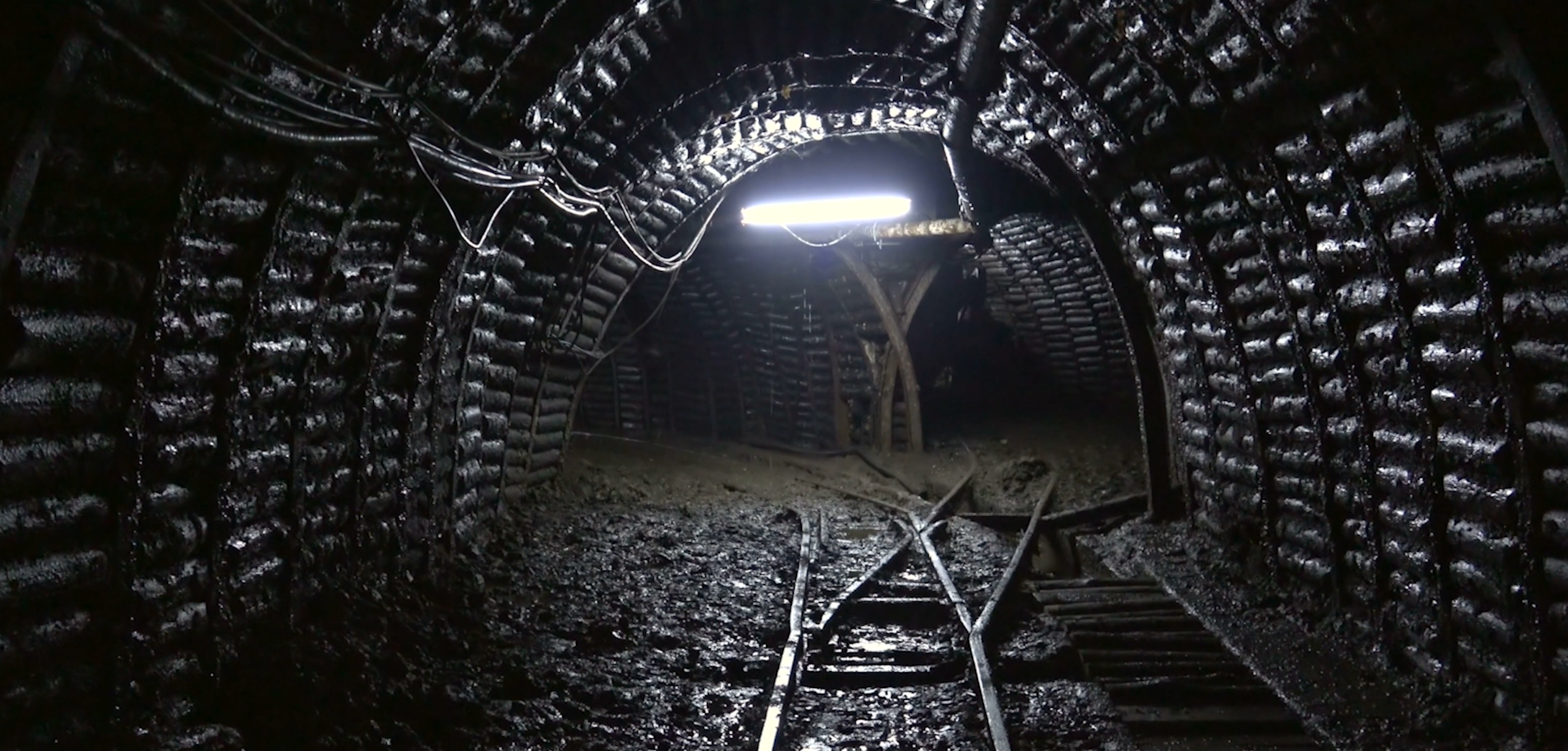
Pumped Storage Hydropower (PSH) accounts for more than 90% of grid-scale energy storage in the United States. As the nation’s need for reliable and secure energy storage grows, the U.S. Department of Energy’s Oak Ridge National Laboratory (ORNL) is investigating the potential of repurposing abandoned coal mines for PSH. By leveraging existing mine infrastructure, this approach could provide a cost-effective and scalable means of strengthening grid stability and enhancing the effectiveness of domestic power production.
ORNL researchers are using computational models to assess the feasibility of underground coal mines for PSH applications. The researchers aim to accurately model key factors such as hydrodynamic behavior, chemical interactions, and their impacts on PSH system performance, alongside economic and site selection analyses.
Results
The team has successfully developed hydrodynamics and chemical models to analyze physical aspects of PSH using coal mines. These models evaluate water movement, chemical changes caused by native mine materials, and potential physical and chemical interactions with mine infrastructure and PSH equipment.
The researchers will supplement their work by conducting a techno-economic analysis to support financial viability assessments. They also plan to conduct system efficiency analyses to determine best practices in coal mine PSH facility construction.
Impact
Repurposing abandoned coal mines for PSH will expand the reliable, long-duration energy storage solution to new geographic regions while minimizing development costs and accelerating deployment. Integrating new energy storage technologies into the power grid at scale will enhance both reliability and resilience, ensuring stable energy access nationwide.
Partnerships
ORNL is working to address key technical challenges based on site-specific data provided by industry partners. This collaboration has helped to identify critical site-specific considerations, and may continue to provide insights to guide future. To request more information or to discuss future collaborations, please contact Thien Nguyen at [email protected].