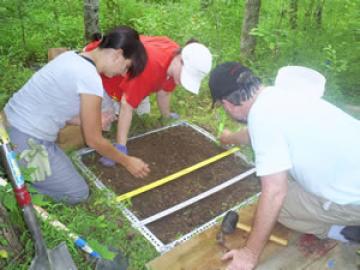
Predicting how forests will respond to increased levels of atmospheric carbon dioxide involves understanding the interplay among carbon dioxide, nutrients, water, plant and soil processes.
Filter News
Science Area
News Type
For the first time, industry and policymakers have a comprehensive report detailing the U.S. hydropower fleet’s 2,198 plants that provide about 7 percent of the nation’s electricity.
A major multinational report on bioenergy and sustainability released Tuesday concludes the sustainable production of bioenergy can be an important tool for addressing climate change.
By studying fish and invertebrates in a creek with known mercury contamination, researchers are gaining a better understanding of the relationship between the toxin in the stream and bioaccumulation in organisms.
While reflective roofs can save energy and money for homeowners, microbial communities and the biofilms they create can eat away at the effectiveness and savings.
Researchers from the Department of Energy’s Oak Ridge National Laboratory will play key roles in an expansive new project that aims to bring the future of tropical forests and the climate system into much clearer focus by coupling field research with the d
Five more nature walks are planned this spring on the Department of Energy’s Oak Ridge Reservation with themes of frog calls and bat monitoring, wildflowers and forest growth, bird watching, invasive plants, reptiles and amphibians.
meter observation tower in the nearby Walker Branch Watershed, Oak Ridge National Laboratory researchers are poised to begin their part of a national study to better understand ecosystems.

By identifying two genes required for transforming inorganic into organic mercury, which is far more toxic, scientists today have taken a significant step toward protecting human health.