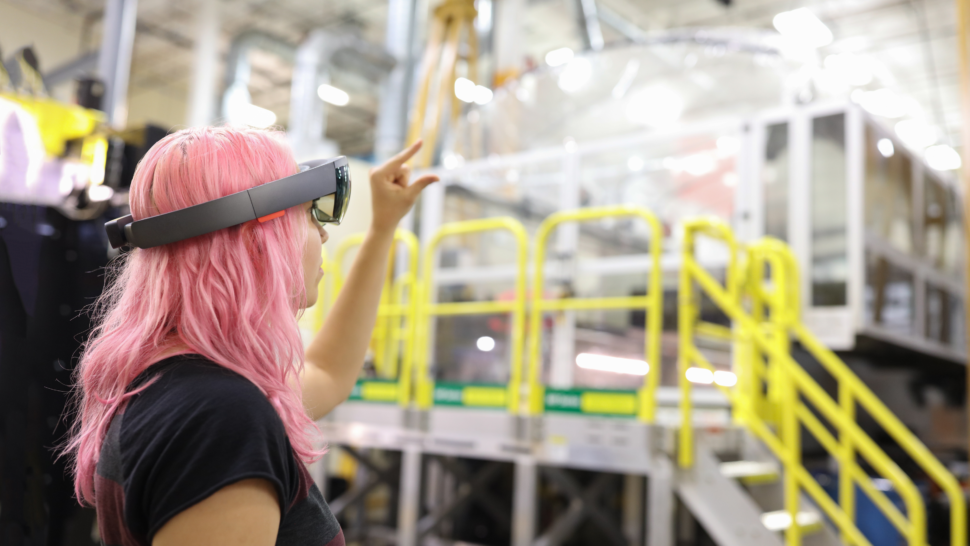
Turning AI innovation into real-world impact
The Department of Energy’s Oak Ridge National Laboratory is utilizing Artificial Intelligence (AI) to deploy science with impact breakthroughs in advanced manufacturing, buildings and transportation technologies, energy storage, the power grid and electrification at a rapid pace.
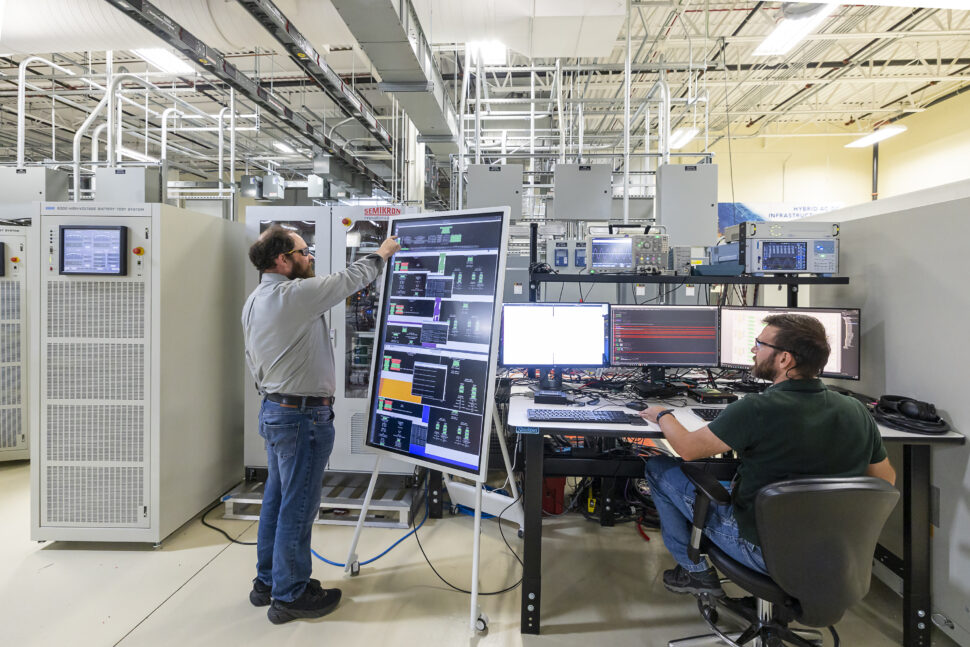
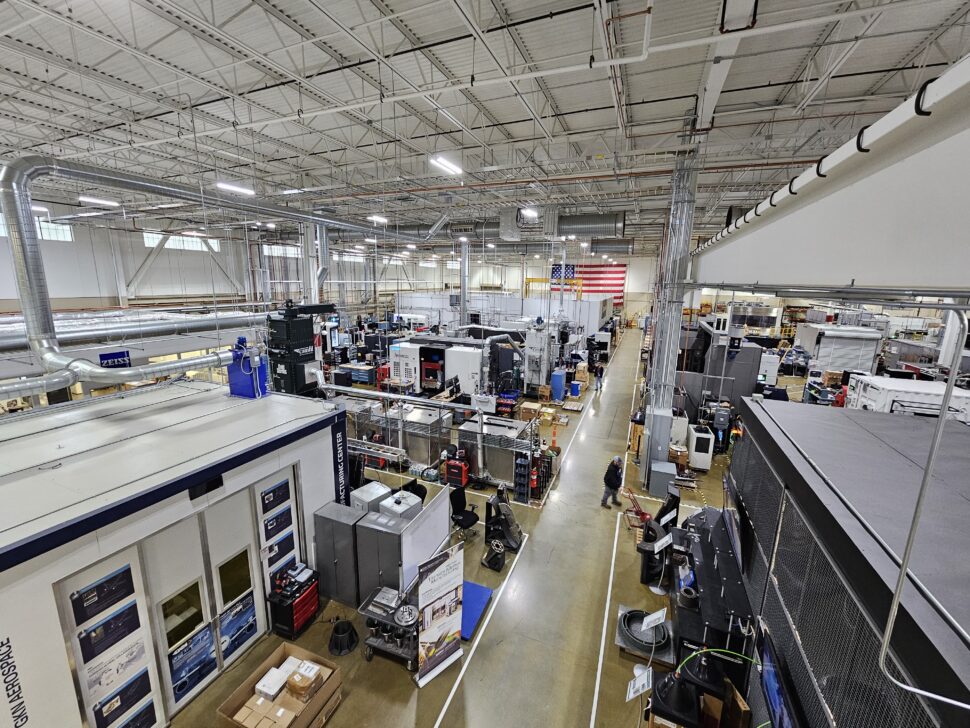


Researchers in the Energy Science and Technology Directorate (ESTD) utilize the resources of the Manufacturing Demonstration Facility (MDF), the Building Technologies Research and Integration Center (BTRIC), the National Transportation Research Center (NTRC) and the GRID-C (Grid Research Innovation and Development Center) at ORNL to drive groundbreaking research out of the development stage and into the hands of industry for commercialization and consumer use across the nation. These facilities provide industry with laboratory space and the opportunity to collaborate with researchers to test and demonstrate technologies before marketplace adoption.
By easing traffic congestion and enabling fast building construction, certifying critical manufactured components for applications such as airplanes and defense, and ensuring power flows reliably through the grid, ESTD scientists play a pivotal role in securing America’s future.
AI is being leveraged at ORNL to deliver affordable and reliable scientific innovations to industry, consumers and the nation.

AI in Manufacturing
Connecting data into a seamless digital thread
A software platform developed at ORNL, Damara Tern, transforms how advanced manufacturing data is managed by connecting materials and process information into a seamless digital thread. The platform supports more than 25 types of operations and integrates data from over 70 machines, giving researchers and engineers a unified view across complex workflows. By organizing data into simple categories and enabling integration with AI, simulation, and qualification tools, Damara Tern helps accelerate innovation and collaboration across the manufacturing ecosystem while producing AI-ready datasets for model development, analysis, and deployment.
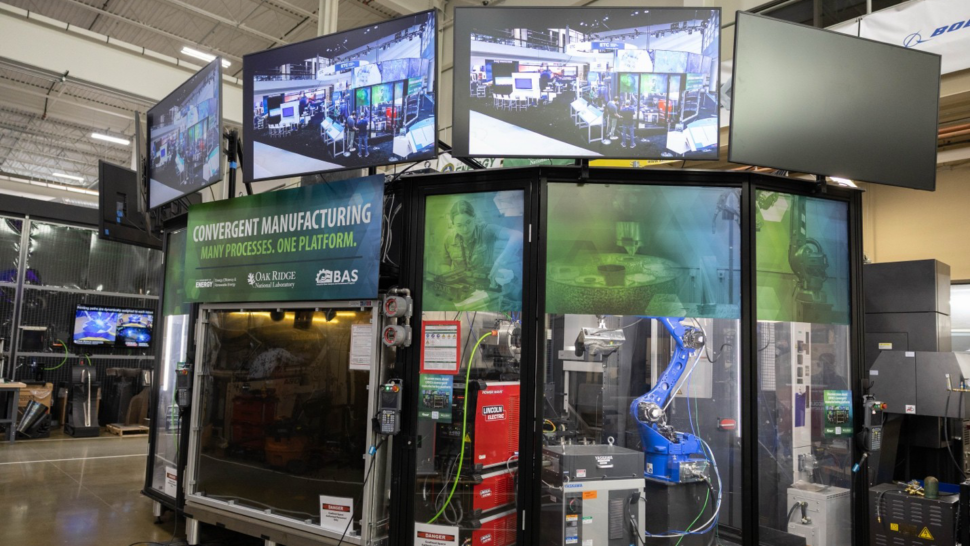
Reducing qualification time for critical components
ORNL has developed state-of-the art AI tools, Peregrine and Pelican, that analyze in situ manufacturing data in real time using sensor-agnostic methods. Peregrine supports the evaluation of digital twins – digital models of real-world products, systems, or processes linked to their physical counterparts – and collected on powder bed additive manufacturing systems. These capabilities reduce qualification timelines from months to weeks while maintaining regulatory compliance. Pelican extends capabilities to directed energy deposition and composite technologies, addressing a broader range of manufacturing applications.
Improving industrial computed tomography inspection
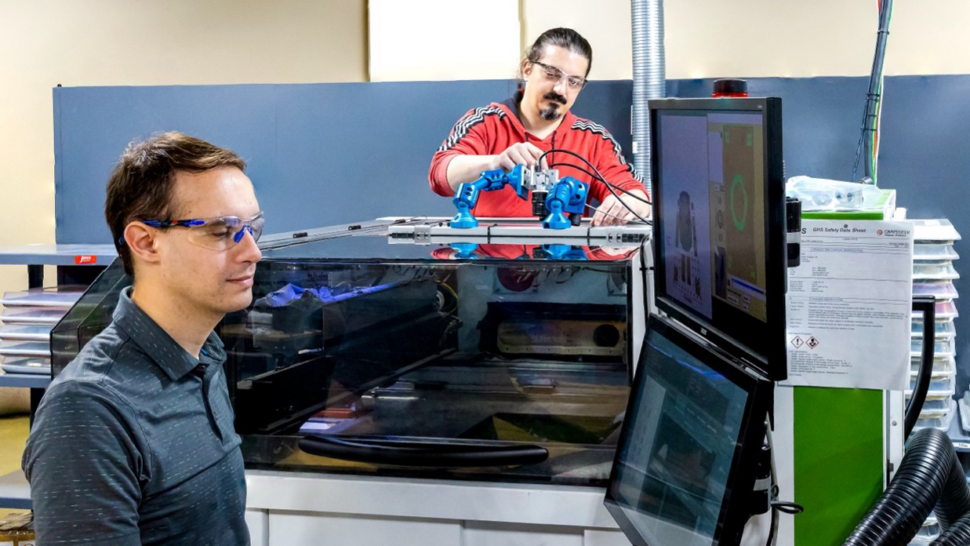
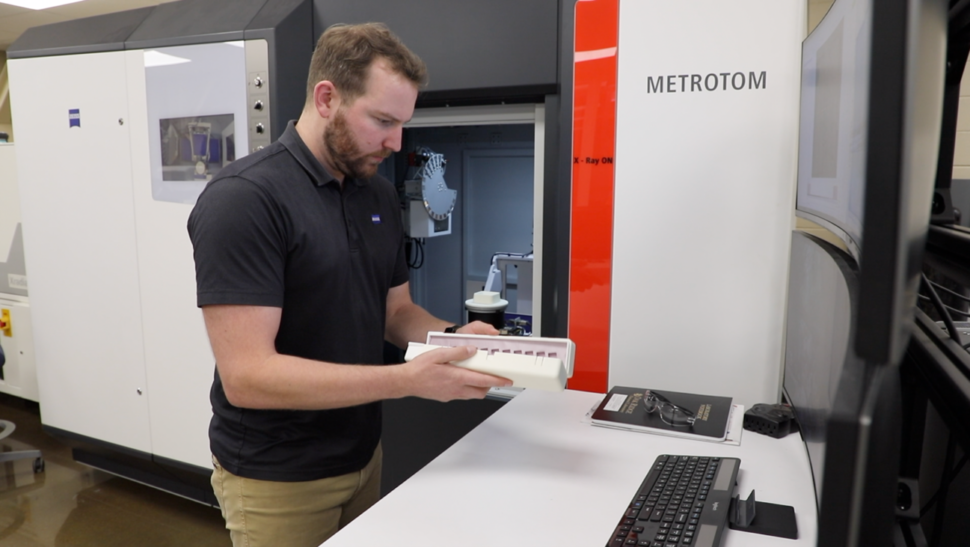
ORNL’s AI-powered computed tomography reconstruction software, Simurgh, makes industrial scans up to 12 times faster while improving defect detection fourfold. In additive manufacturing applications, the technology reduced process optimization time by 80 percent. Faster inspection enables rapid iteration and improves reliability across manufacturing sectors. By dramatically shortening feedback loops, Simurgh allows manufacturers to move from prototype to qualified parts more quickly and with greater confidence.
AI in Buildings
Designing foam insulation with unprecedented thermal performance
Using an AI framework and the simulation tool ThermoPi, ORNL designed high-performance foam insulation for buildings that delivers thermal performance more than 30 percent higher than current commercially available polyisocyanurate (PIR)-based foam insulation. The new PIR foam formulation enabled the achievement of an initial R-value of 8.3 per inch which is the highest yet for this type of insulation. Thermal insulation reduces the transfer of heat through walls, roofs, floors, and heating, ventilation and air-conditioning ductwork. It’s also used to insulate refrigeration trailers, trucks and cold storage facilities.

Certifying concrete foundations in seconds
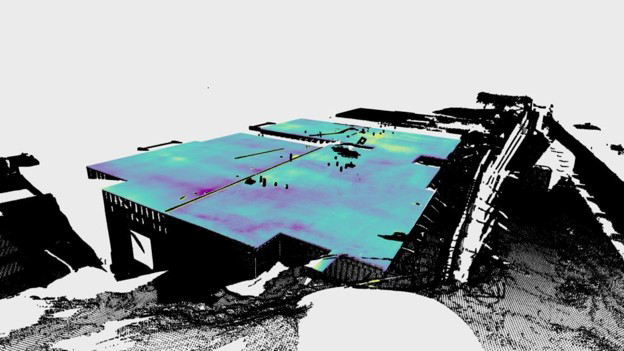
A tool developed by ORNL, the Flat and Level Analysis Tool (FLAT), uses AI to replace slow, manual methods for checking how flat and level a concrete foundation is during construction. By analyzing a 360-degree laser scan with segmentation and machine-learning algorithms, the system can detect uneven areas on a concrete slab within seconds. This AI-powered process cuts measurement time by more than 90 percent and allows installers to fix problems before the concrete hardens, avoiding hours of rework and unexpected costs. By boosting accuracy and productivity, FLAT supports more affordable and efficient construction.
Assembling building components in real-time
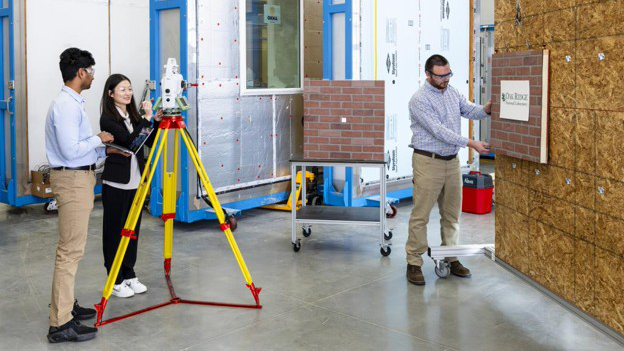
Buildings can be assembled or retrofitted rapidly with the Real-Time Evaluator (RTE) tool developed by ORNL. The RTE uses AI-powered algorithms to guide installers as they install prefabricated components into large structures. By using AI to detect components, automate measurements, and predict installation issues through deep reasoning, this system shortens installation time by 25 percent while achieving accuracy within one-eighth of an inch. Beyond buildings, the RTE tool can also support the construction of complex structures such as nuclear facilities and bridges. By improving speed and accuracy, this AI-powered tool lowers costs and increases productivity in construction.
AI in Transportation
Using traffic controls to ease congestion
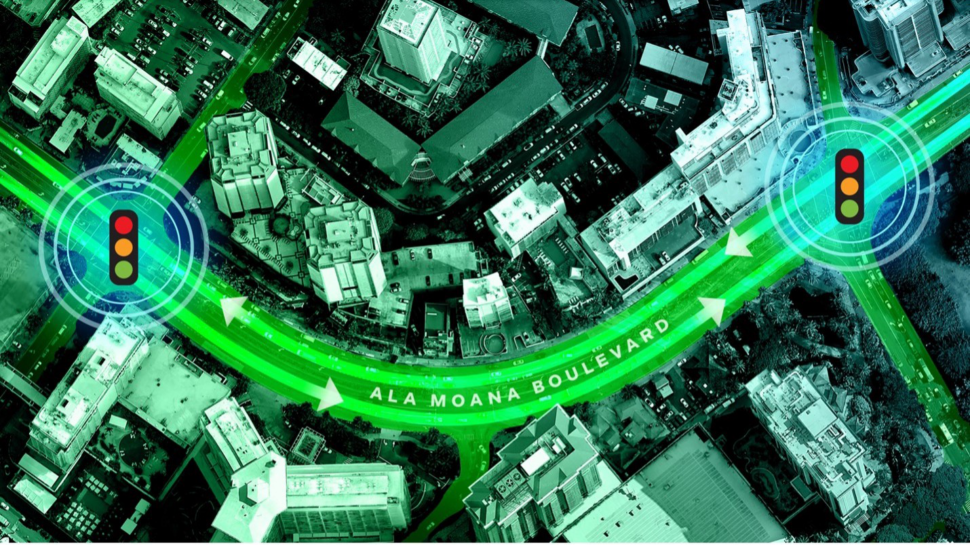
ORNL developed and tested AI-based modeling and signal controls that reduced delays across the Nimitz Highway and Ala Moana Boulevard arterial in Honolulu, Hawaii. The system optimized conditions for up to 20 percent less delay per vehicle at individual intersections. Researchers are working to make the AI controllers production-ready, enhance their cybersecurity and expand the project to include dynamic routing along a parallel arterial to help divert traffic during periods of high congestion and further improve efficiency.
Optimizing traffic flow with digital twin
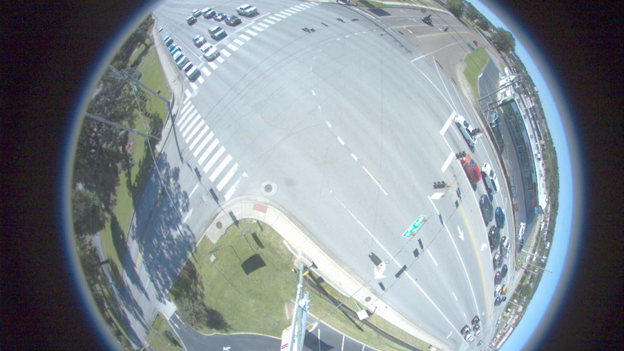
ORNL researchers developed a transportation digital twin for Chattanooga, Tennessee to optimize traffic flow and reduce energy use. In collaboration with the City of Chattanooga and the National Laboratory of the Rockies, ORNL used real-time traffic data, machine learning and data science to relieve traffic congestion. The platform integrates live traffic camera feeds, radar sensors positioned approximately every half mile and E-911 traffic data to model conditions across more than 350 intersections, enabling researchers to identify bottlenecks and test signal timing strategies before real-world implementation. At a major congestion point along Shallowford Road, adjustments to traffic-light controllers resulted in estimated energy savings of up to 16 percent.
Accelerating electric motor design
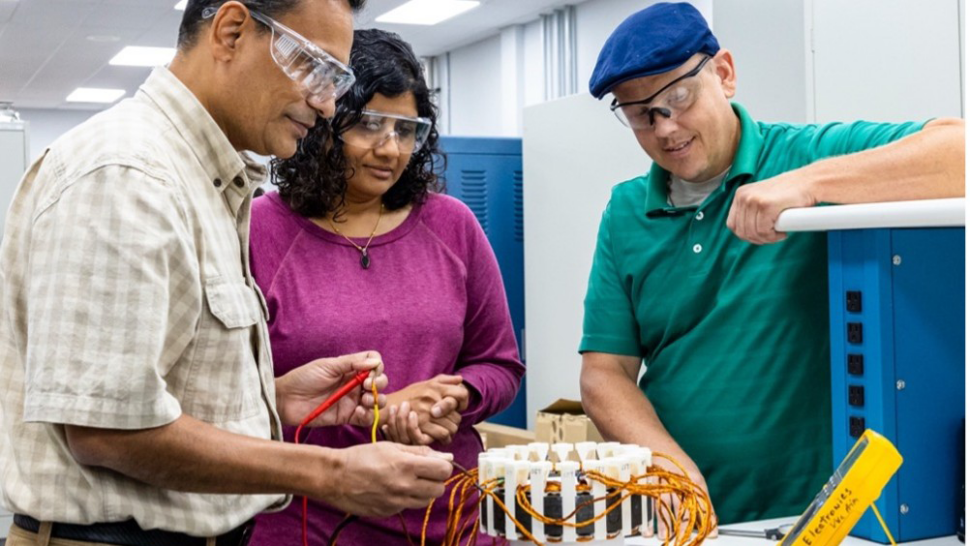
Designing electric motors involves trial and error, using complex computer simulations to balance performance, size and material use. Scientists at ORNL developed Motor AI, a tool that learns from past simulation data to predict future motor designs. By reducing the number of high-fidelity calculations needed, this technology allows scientists to explore more options in less time. Early results show that Motor AI can identify motor designs that are about 13 percent smaller while maintaining the same efficiency, with a focus on lowering reliance on hard-to-source critical materials.
AI in the Grid and Electrification
Detecting grid events and electrical arcing
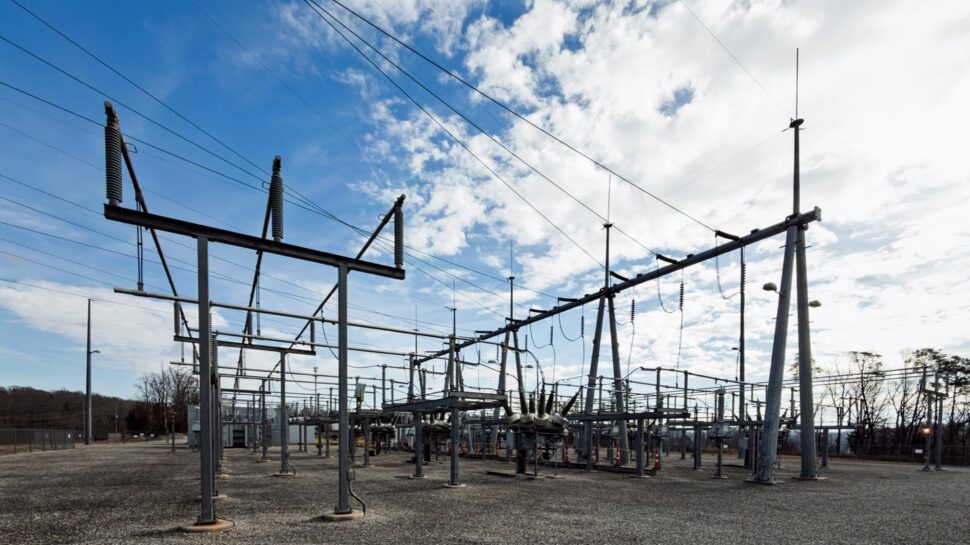
ORNL developed physics-informed AI for the early detection of low-current arcing and grid anomalies, which often precede equipment failure or wildfires. Using waveform data from grid sensors and utilities, the research team developed an AI-assisted analytics pipeline that combines advanced signal-processing techniques – including spectral correlation function and multiple signal classification algorithms – with machine learning classifiers that learn to identify and categorize grid disturbance signatures. Using structured features extracted from raw signals, the system detects and classifies many types of grid events including electrical arcing, blown fuses, and various operating faults. In testing with real utility data, the method amplified the visibility of faults in waveforms from 6 to 72 percent, revealing previously hidden grid disturbances.

Preventing blackouts with EMT Simulation Software
AI-driven discovery of latent matrix structure is redefining electromagnetic transient (EMT) simulation, a complex grid modeling approach that enables increased accuracy for modern grids and incorporate extensive power electronics. By learning patterns, adaptively reordering matrices, and orchestrating aligned, structure-aware solvers, this approach delivers results ten times faster. The capability transforms planning, large load integration, protection, and control studies by turning previously prohibitive computing runs into routine workflows. The resulting software platform will make the broader adoption of EMT modeling more viable for utilities, helping prevent blackouts and unsafe operating conditions.
Advancing identification of alternatives to critical minerals
ORNL developed AI tools to help explore new materials that could replace scarce and expensive critical minerals, such as the platinum group metals used in energy technologies. Researchers created an AI system that can read a plain-language description of a desired crystal structure – for example, a crystal with reduced platinum concentration that maintains the same structure and properties – and automatically convert it to computer code. This code incorporates the mathematical parameters of crystal formation and generates a structure ready for scientific simulations. The system uses two cooperating large language models: one generates the code, and the other checks it to improve accuracy. The dual-model approach reduces errors and helps scientists search for promising materials faster and more efficiently.

AI innovations were supported by DOE’s Building Technologies Office, the Transportation Technologies Office, and the Office of Electricity.
The MDF is supported by DOE’s Advanced Materials and Manufacturing Technologies Office and acts as a nationwide consortium of collaborators focused on innovating, inspiring and catalyzing the transformation of U.S. manufacturing.
UT-Battelle manages ORNL for DOE’s Office of Science, the single largest supporter of basic research in the physical sciences in the United States. The Office of Science is working to address some of the most pressing challenges of our time. For more information, please visit energy.gov/science.