
Powder metallurgy-hot isostatic pressing (PM-HIP) technology is gaining momentum as manufacturers seek new ways to produce larger, stronger and more reliable components for energy, defense, aerospace and industrial applications.
PM-HIP is an advanced manufacturing process that consolidates metal powders at high temperature and high pressure to produce large, near-net shaped components with superior performance and reliability, potentially reducing costs and derisking the supply chain.
More than 200 experts from industry, government, academia and national laboratories gathered at the Department of Energy’s Manufacturing Demonstration Facility (MDF) at Oak Ridge National Laboratory in October 2024 to identify opportunities for and challenges to adoption of the technology. Their conclusions, available in a new report, point to a rapidly growing field with the potential to transform advanced manufacturing.
Register to attend the 2026 PM-HIP 2026 Workshop on Nov. 4–5.
1. Demand for PM-HIP is growing faster than manufacturing capacity
Industry leaders see PM-HIP as a promising alternative to traditional casting and forging, particularly as domestic manufacturing capacity struggles to keep pace with demand. Participants highlighted growing needs for large components used in nuclear energy, defense, aerospace, oil and gas, and fusion energy systems.
“We expect demand for hot isostatic pressing to keep growing as industries look for stronger, more reliable components and more secure supply chains,” said Soumya Nag, an ORNL senior research scientist and one of the authors of the workshop report. “At the same time, manufacturers are telling us that today’s infrastructure may not be enough to support future needs.”
2. Larger HIP systems could unlock new markets
One of the clearest messages from workshop participants was the need for larger HIP vessels.
Current systems are too small to manufacture some of the components needed for advanced reactors, defense systems and large-scale energy infrastructure. HIP vessels larger than 4 meters in diameter will be critical for producing reactor pressure vessels, turbine components and other large structures.
“Access to larger HIP equipment would immediately create new opportunities for companies and accelerate adoption,” said Nag.
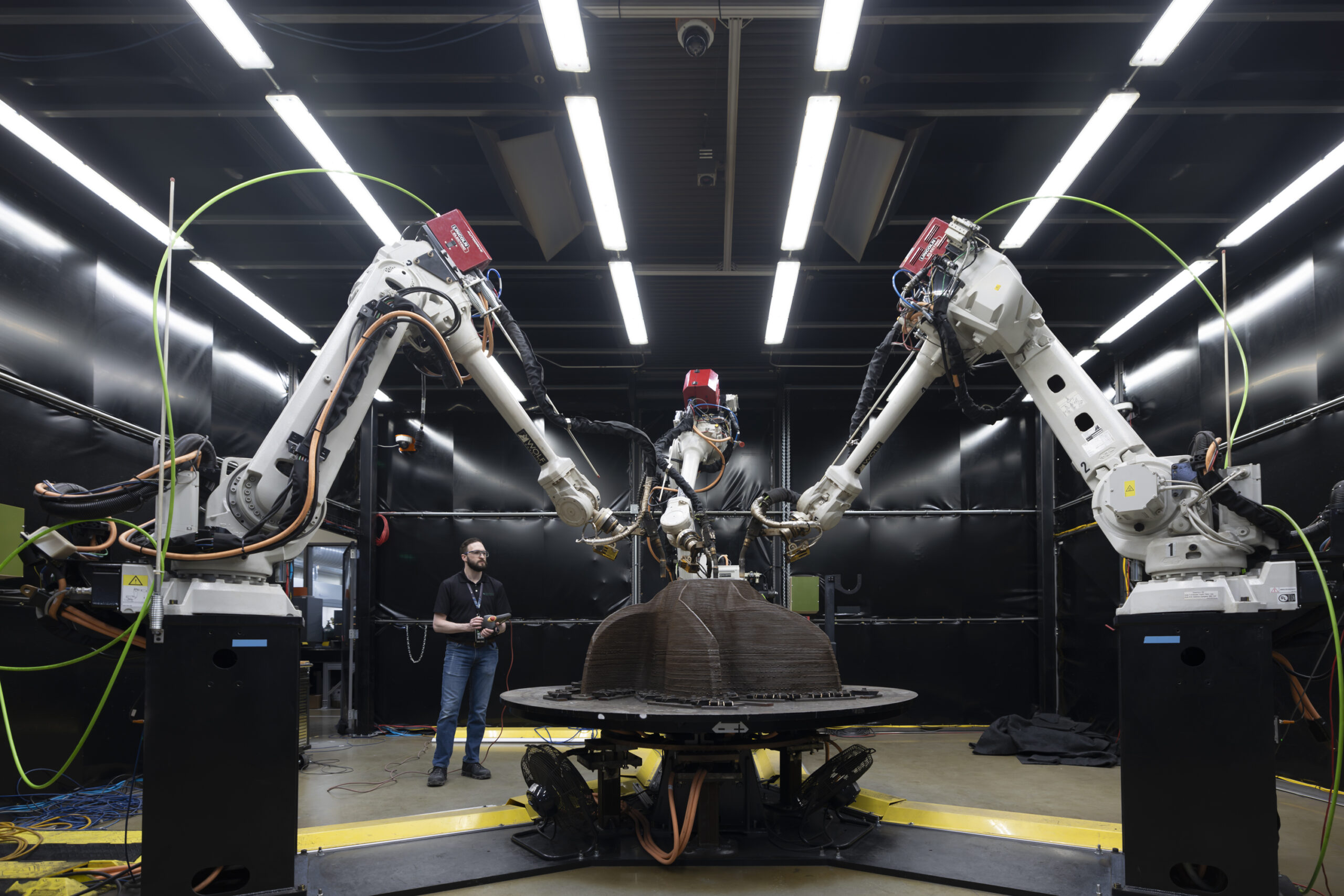
3. Digital engineering could reduce costly trial and error
Despite advances in PM-HIP, modeling tools remain limited.
Manufacturers lack comprehensive software capable of predicting powder behavior, capsule deformation and final component dimensions throughout the HIP process. As a result, companies often rely on expensive experimentation and lengthy development cycles.
Experts identified artificial intelligence-driven simulations, digital twins, machine learning and real-time process monitoring as key technologies for improving predictability and reducing costs. Better digital tools could move the industry closer to a streamlined powder-to-part workflow with fewer qualification hurdles and less rework.
4. Powder supply could become the industry’s biggest bottleneck
The performance of a PM-HIP component depends on the quality of the powder used to produce it.
“Powder availability, quality and standardization are major concerns. Demand for specialty metal powders continues to increase, while production lead times can range from 6 to 12 months,” said Nag.
Participants also stressed the need for stronger standards governing powder chemistry, particle size distribution, storage, handling and traceability, as well as more agile qualification and certification pathways that reduce deployment time and cost.
Expanding domestic powder production across strategic alloy systems — such as nuclear-grade steels, lightweight titanium alloys, high-strength nickel-base superalloys, and refractory alloys capable of withstanding extreme temperatures — was viewed as essential for supporting future growth and reducing dependence on vulnerable supply chains.
5. Collaboration will determine how quickly PM-HIP scales
Perhaps the workshop’s strongest conclusion was that no single organization can address these challenges alone.
Participants recommended establishing a PM-HIP consortium, creating shared databases and technical guidebooks, and developing a center of excellence to accelerate technology adoption. They also called for stronger partnerships among industry, government agencies, national laboratories and universities.
The goal is straightforward: reduce risk, share knowledge, accelerate qualification and make advanced manufacturing capabilities accessible to a broader range of companies. If successful, these efforts could help PM-HIP become one of the mainstream manufacturing pathways for the next generation of energy, defense and industrial systems.
Why it matters
The workshop’s findings point to a future in which PM-HIP strengthens U.S. manufacturing competitiveness, improves supply chain resilience and enables components that are difficult — or impossible — to produce through conventional methods. With continued investment in infrastructure, digital tools, standards and collaboration, PM-HIP could play an increasingly important role in delivering the large, high-performance components needed to support America’s energy, security and industrial priorities.
MDF is supported by DOE’s Advanced Materials and Manufacturing Technologies Office and acts as a nationwide consortium of collaborators focused on innovating, inspiring and catalyzing the transformation of U.S. manufacturing.
UT-Battelle manages ORNL for DOE’s Office of Science, the single largest supporter of basic research in the physical sciences in the United States. DOE’s Office of Science is working to address some of the most pressing challenges of our time. For more information, visit energy.gov/science.